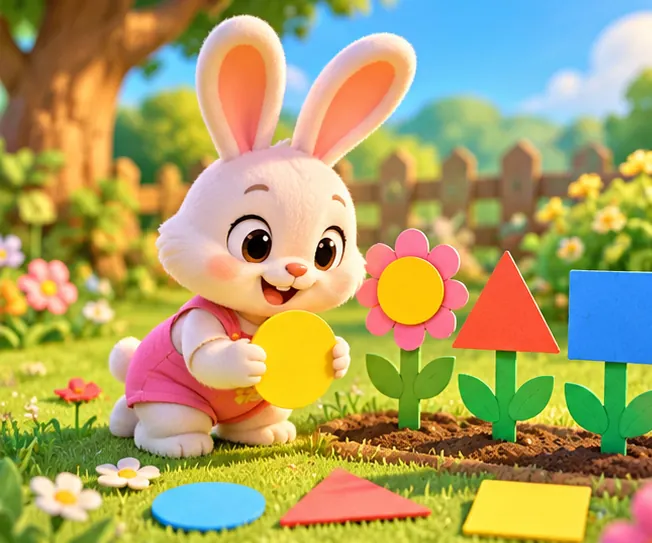
Shapes & colorsBloom Bunny’s Shape Garden
Prepare: Paper and pencils, or a few blocks and toys.
- Draw a garden with a circle sun, triangle roof, rectangle path and any shapes the child chooses for flowers.
- Ask the child to find or draw two objects that share one shape.
- Give a two-part clue, such as “add a blue circle,” then invite the child to make a clue for you.
Ask: “What makes those shapes alike?” “Could this object fit a different group too?”
Try next: Go on a safe room shape hunt. Describe objects by shape as well as color so the activity does not depend on color alone.
Related: Shapes & Colors →
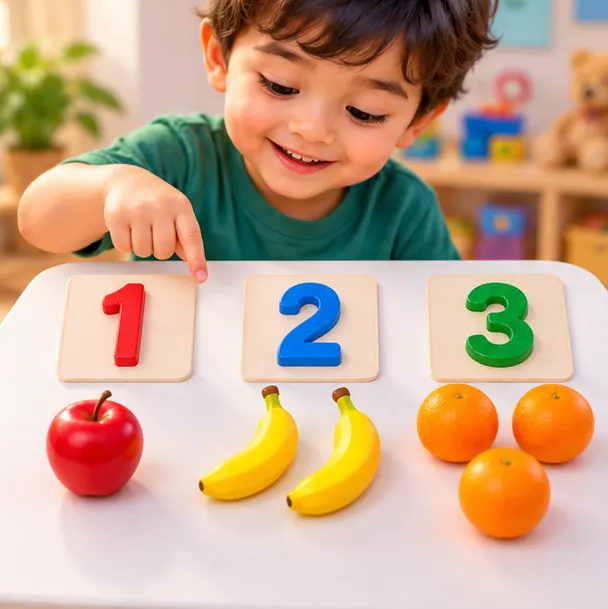
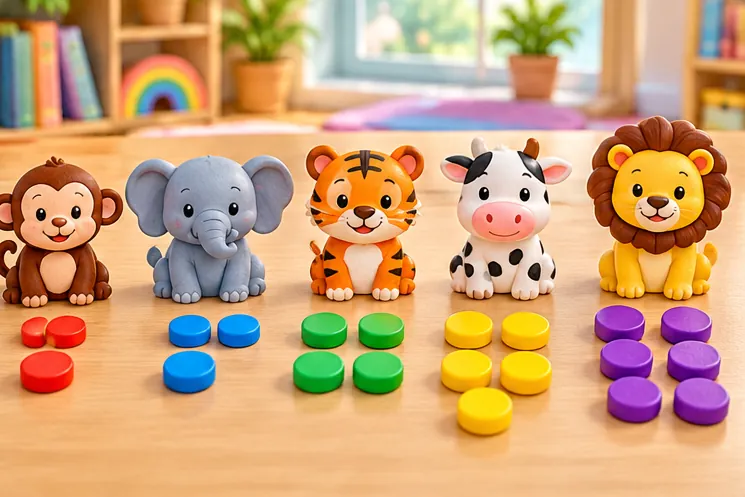
Counting & comparisonMoonwater Duck’s Counting Pond
Prepare: Drawn lily pads or large paper circles, plus toy ducks or other safe counters.
- Place three counters on the “pond,” touching or moving one as each number word is said.
- Add one counter and count the whole group again.
- Make a second group and compare: which has more, fewer, or the same number?
Ask: “How can we check?” “What changes if one moves away?”
Try next: Invite the child to set up a pond puzzle for you. Use larger safe objects and adult supervision with children who still mouth small items.
Related: Counting 1–10 →
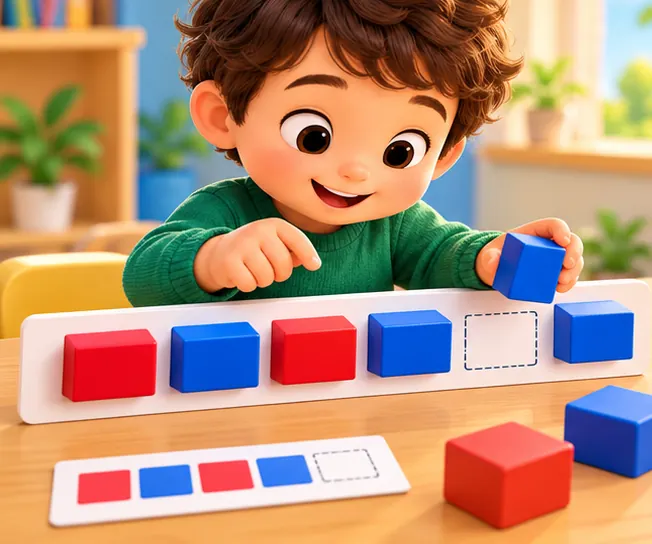
Patterns & memoryLumi-Web’s Pattern Web
Prepare: Two kinds of blocks, large paper shapes or drawn symbols.
- Make a simple repeating pattern such as circle–square–circle–square.
- Leave a gap and ask what could go there and why.
- Make a new pattern together, then cover it briefly and see what the child remembers.
Ask: “What repeats?” “How did you decide?” Accept explanations that match the pattern the child can see.
Try next: Change the rule to two of one shape and one of another, or let the child design the pattern.
Related: Pattern Activities →
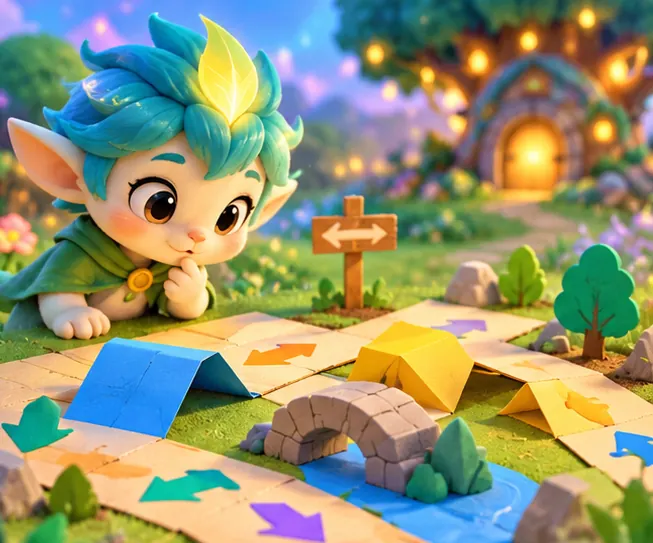
Direction & flexible thinkingFolo’s Folding Path Challenge
Prepare: A sheet of paper with a simple start and finish, and a pencil or large arrow tokens.
- Draw a short route between two points and add one blocked square.
- Use words such as up, down, left and right to describe each move.
- When a route is blocked, pause and plan another path instead of starting over without a plan.
Ask: “What changed?” “Which move could we try instead?”
Try next: Let the child create a route for an adult to solve. Keep the grid small and celebrate explaining a choice, not speed.
Related: Beginner Logic Puzzles →
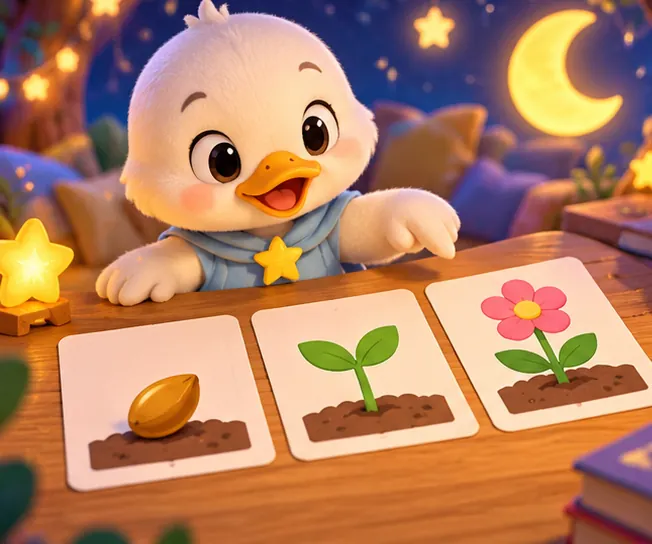
Sequencing & languageLuma’s Dream Sequence
Prepare: Three simple pictures, or three drawings such as a seed, a sprout and a flower.
- Mix the pictures and invite the child to arrange them in a sequence.
- Ask the child to describe what happens first, next and last.
- Change one card and talk about whether the story still makes sense.
Ask: “What clue helped you choose the order?” “Could another order work in a different story?”
Try next: Draw three moments from a familiar routine or make a new magical sequence together.
Related: What’s Next? →
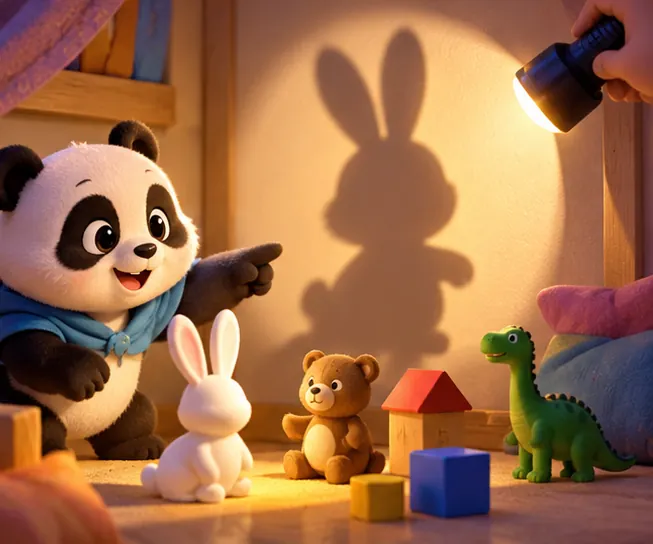
Observation & cluesShado’s Shadow Clue Challenge
Prepare: A few familiar objects or pictures. An optional flashlight should be used by an adult, never aimed at eyes.
- Choose an object and give one visible clue, such as “it has wheels” or “it is round.”
- Invite the child to name a possible object and explain the clue they used.
- Add a second clue or remove one possibility until the choices are clearer.
Ask: “Which clue helped most?” “What else could fit?”
Try next: Describe an object without naming it. Children can answer by pointing, speaking or drawing.
Related: Logic Puzzles →
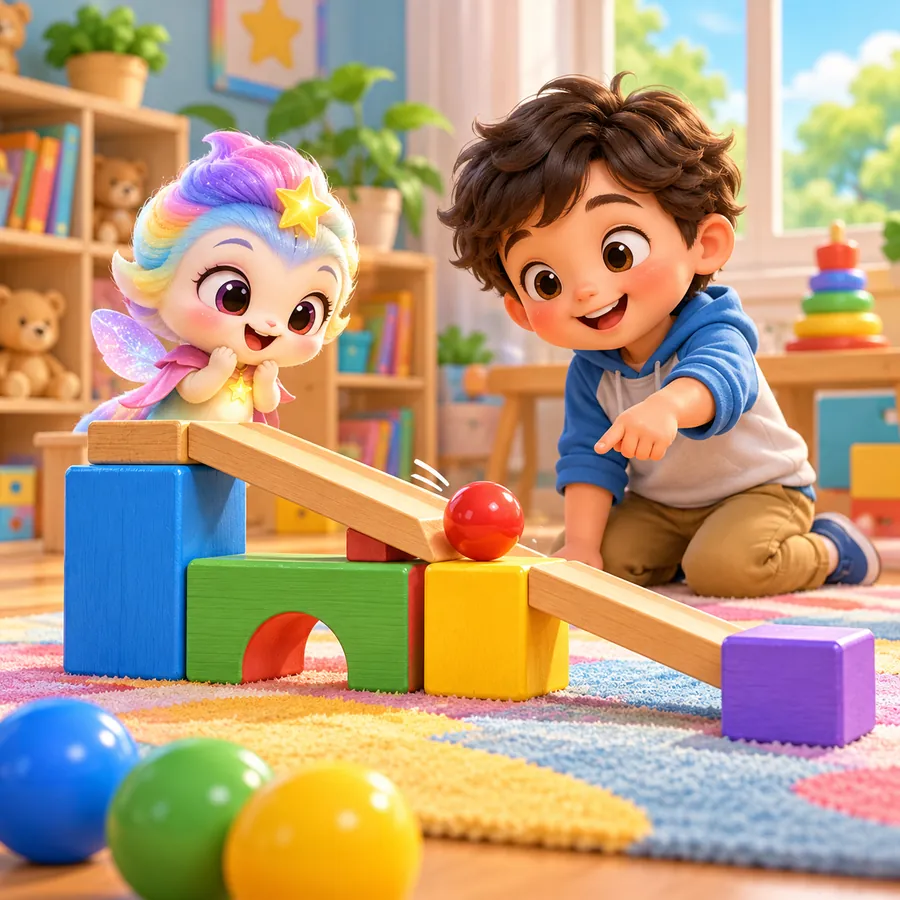
Cause & effectAura’s Magic Cause-and-Effect Challenge
Prepare: Two blocks, a paper ramp or another safe setup that can be changed without force.
- Before trying it, ask what might happen when one block is placed at the top of the ramp or beside another block.
- Try the action, then describe exactly what happened.
- Change one part of the setup and predict again. Compare the two results.
Ask: “What did we change?” “Did the result match our prediction?” “How could we test the idea again?”
Try next: Let the child choose one safe change to test. Treat unexpected results as information rather than as failure.
Related: Simple Classification Games →
Use age-appropriate materials, supervise cutting and movement activities, and avoid small loose pieces with children who may put them in their mouths. Keep sessions short and stop when the child needs a break.