Start with a smaller step
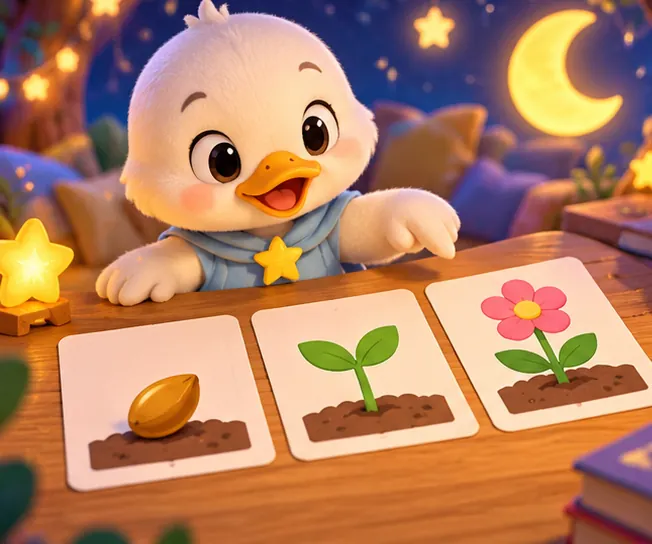
Use two cards with a strong difference and tell the story together before asking the child to place them.
Help Panda Put the Adventure in Order
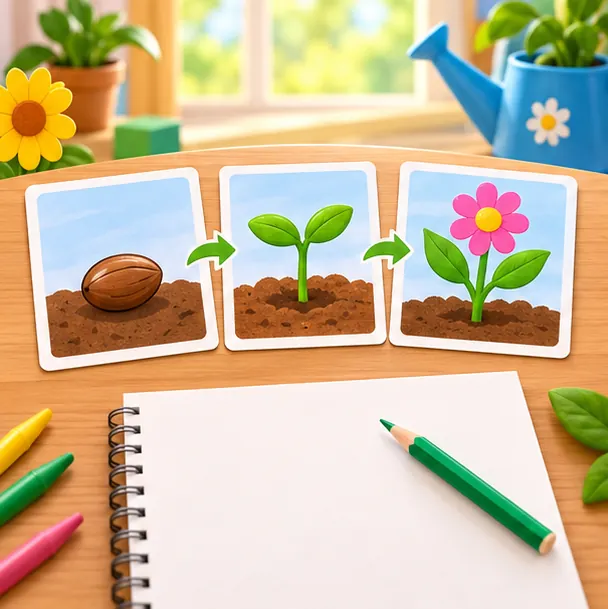
Understand first, next and last by arranging familiar actions or story events in a logical order.
Panda packs a bag, walks to the meadow and starts the adventure. Put the events in the right order.
Lumi-Web has picture cards from a familiar event. Invite the child to find the starting picture, choose what happens next and explain which clue helped decide the order.
Choose three pictures with a clear order, such as seed, sprout and flower, or washing hands in three stages. Shuffle them before beginning.
Goal: Put events in a sensible order and use picture clues to explain what happens first, next and last.
Begin with two or three pictures from a familiar event. Look at each card together, then arrange them in an order that makes sense and explain the clue for the first step.
Name what can be seen in every card without arranging them yet. Ask the child to notice details that could help with order, such as a seed before a plant appears.
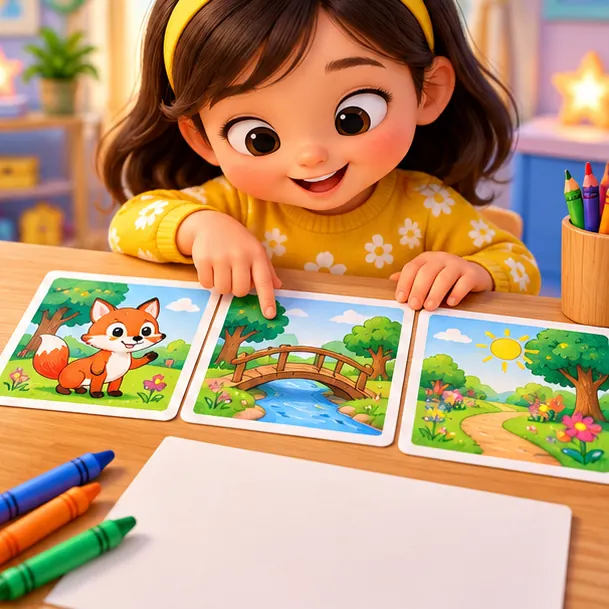
Invite the child to place the pictures in a row. Ask what could happen next and let them move a card when they have a reason for changing the order.
Have the child explain or point through the order. If another order could make sense, ask what story or situation would make it work; sequencing often depends on the context.
Mix cards showing a seed, a small sprout and a flowering plant. Put the seed first, the sprout next and the flower last, then ask what visible clue helped decide.
“What clue shows this happened first?”
“What might happen if we change these two pictures?”
Draw three moments from washing hands, getting ready or planting a seed. Mix the cards, then place them in an order that makes sense.
Ask: What clue helped you choose what came first?
Sequence three events from a known routine, such as choose a book, read it and put it away. Invite the child to draw a missing step or change one step and describe what would happen.
“What clue shows this happened first?”
“What might happen if we change these two pictures?”
Use two cards with a strong difference and tell the story together before asking the child to place them.
Remove one card and ask the child to draw or describe the missing step. Then use three pictures to invent an entirely new story sequence.
Ask children to explain their thinking in any way that works—speaking, pointing or drawing. Avoid insisting on a single order when the pictures do not provide enough information.
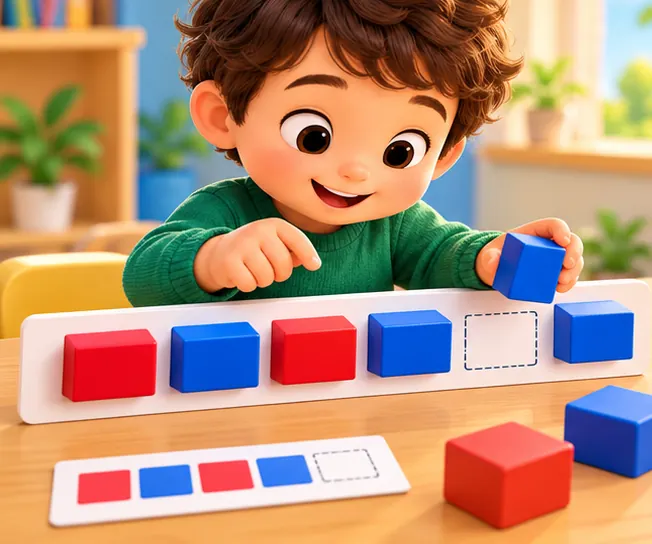
Explore Thinking & Logic activities that practise patterns, memory, route planning and ordering events.
Screen-Free
Use What’s Next? Picture Sequences to arrange picture steps and explain what happens first, next and last.
For Adults
Some stories can have more than one sensible order. Ask the child to explain the sequence rather than insisting on one answer when the pictures are ambiguous.
After sequencing a familiar routine, remove one picture and ask the child to draw or describe the missing step. Then try a new three-picture story.
Explore Related Activities →Tap or select the picture cards in a sensible first-next-last order. Review the sequence and explain what clue helped place each picture.
Print What’s Next? Picture Sequences in A4 or US Letter. The child can arrange the printed steps, draw a missing event or tell the sequence aloud.
Place picture steps in order and tell what clue helped you decide.
This worksheet contains picture steps to place in order. Ask the child what happened first, what followed and what came last; invite them to point to a clue in each picture.