Circle
A circle is round and has no corners. Look for a plate, wheel, clock face or round drawing, then trace its outline with a finger.
Explore shapes. Discover colors. Solve playful challenges! 🌈🐰
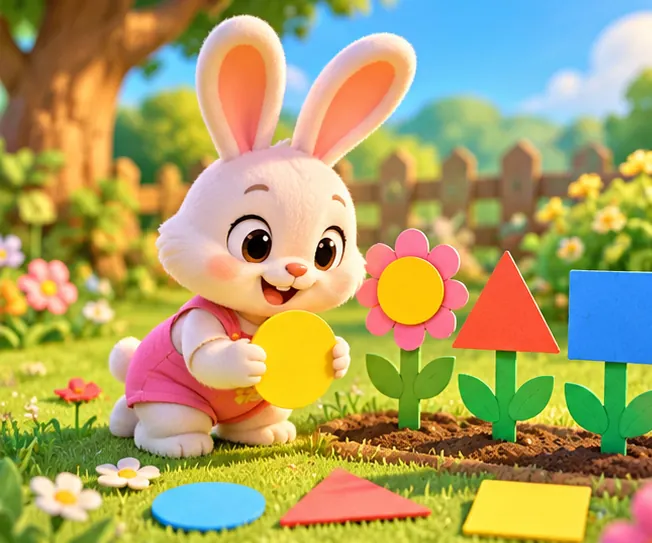
A playful pathway for recognizing, matching, sorting and combining common shapes and colors with Bloom Bunny. Follow the activities in order when you want a gradual progression, or choose one based on your child's interest today.
Open the full activity for examples, guided play, an extension challenge and a parent or educator tip.
Open activity →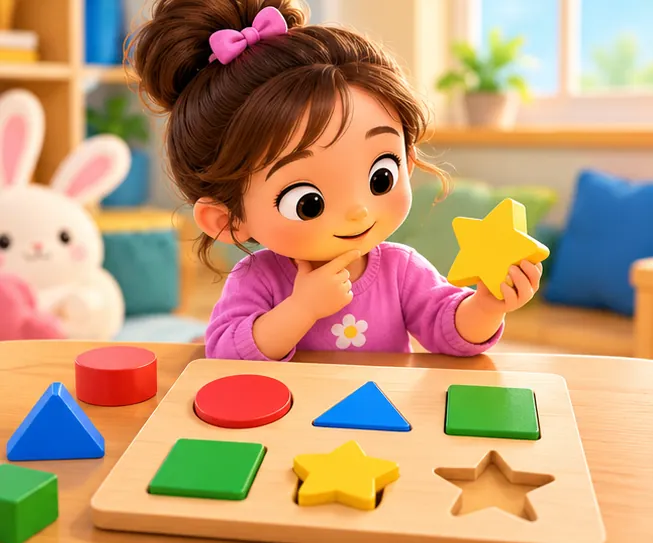
Open the full activity for examples, guided play, an extension challenge and a parent or educator tip.
Open activity →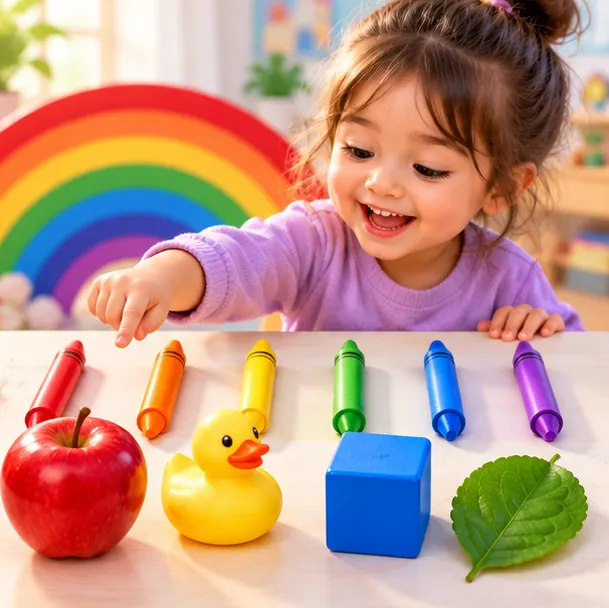
Open the full activity for examples, guided play, an extension challenge and a parent or educator tip.
Open activity →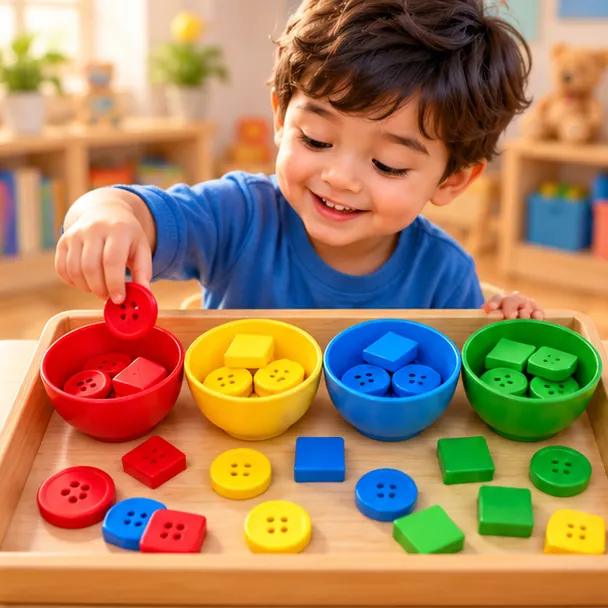
Open the full activity for examples, guided play, an extension challenge and a parent or educator tip.
Open activity →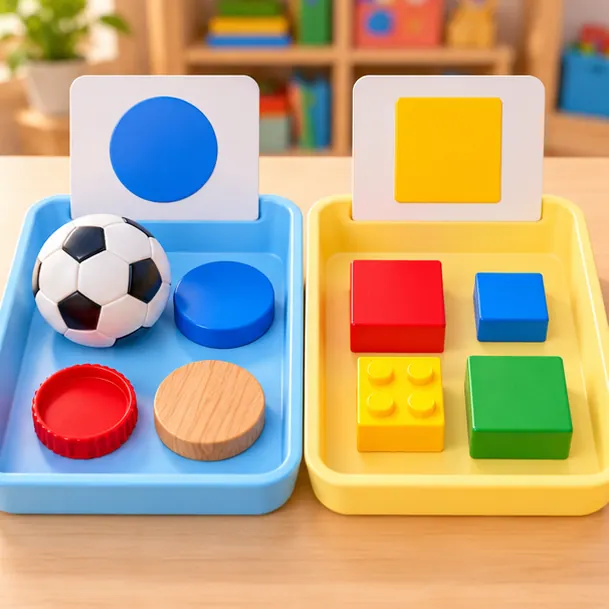
Open the full activity for examples, guided play, an extension challenge and a parent or educator tip.
Open activity →Ask children to name the feature they notice: a color, a shape, straight sides or a curved edge.
Start with obvious matches, then introduce objects that look different but share the same shape.
Let children make a group using one rule, then reuse the same objects with a different rule.
Combine shape and color so children must pay attention to more than one feature.
Short, positive practice is enough. Follow the child's attention, give them time to answer, and celebrate careful thinking and effort.
Children can learn these ideas by looking at objects, touching safe materials, pointing, drawing or explaining what they notice. Start with a few examples rather than teaching every word at once.
A circle is round and has no corners. Look for a plate, wheel, clock face or round drawing, then trace its outline with a finger.
A square has four equal sides and four corners. Build one with sticks, blocks or a drawing, then compare it with a rectangle.
A triangle has three straight sides and three corners. Look for a triangle in a picture or make one with three straight pieces.
A rectangle has four sides and four corners. Many familiar rectangles, such as books and doors, have two longer sides and two shorter sides.
Choose red, yellow, blue, green, orange, purple, pink, black or white. Invite the child to point to an object that appears that color, then swap roles.
Give a two-part clue such as “find a blue circle” or “draw a red rectangle.” Let the child make their own clue when ready.
“What do you notice?” “How are these shapes different?” “Can you find another example?” “Would it fit more than one group?” Real objects come in many colors and shapes, so talk about what is actually visible rather than requiring one fixed answer.
A cup, book, plate, block or paper drawing can become a learning prompt. Choose safe objects that the child can easily see and handle.
Start with one clue: “Find something round” or “Find something blue.” Let the child point, bring the item over, or draw it if moving around is not suitable.
Try “a red rectangle” or “a yellow circle.” If no object fits, draw one together. Explain that real objects vary and the point is to notice features, not to guess a hidden answer.
Group a few objects by shape, then try size or use. Discuss objects that could fit more than one group and ask the child to explain the rule they chose.
Do not rely on color as the only clue. Combine it with shape, size, texture or an object's use; invite the child to name, point, sort or describe in whatever way works for them.
Explore another learning path or visit a Kids4U story for a playful change of pace.
Back to Learn & Play →Give children a real task to finish on paper: color shapes, match everyday objects to color swatches, sort objects by color or shape, follow two-clue challenges, and create a picture from shapes.
The 8-sheet pack includes dedicated color matching and color sorting activities alongside shape recognition, shape sorting, two-clue challenges and drawing. Choose A4 or US Letter to match your printer.
Choose shapes and colors to build a picture on the page, then save your creation. When you're ready, use the printable version below for extra practice away from the screen.
Need a paper copy? Choose A4 or US Letter in the printable section below. No answers or personal details are sent anywhere.