These activities use ordinary household objects, paper or movement. Choose one that fits your child's interest, keep the first round short, and treat answers as a chance to talk together rather than as a test. The age range is flexible: simplify the task or add a challenge based on the child.
COLORS · 5–10 MIN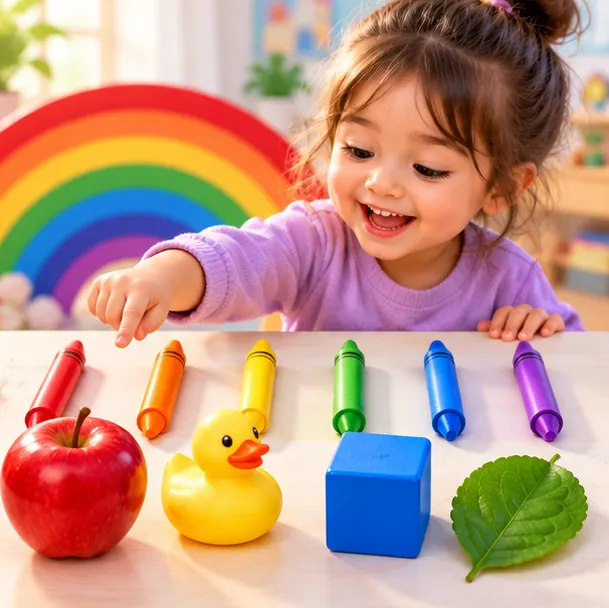
1. Color Hunt
Materials: A few safe objects around the room.
How to play: Name one color and invite the child to find up to five matching objects. Say each object's name together and notice whether the shades look the same or different.
Try next: Sort the finds into two color groups or let the child choose the next color.
NUMBER RECOGNITION · 5–10 MIN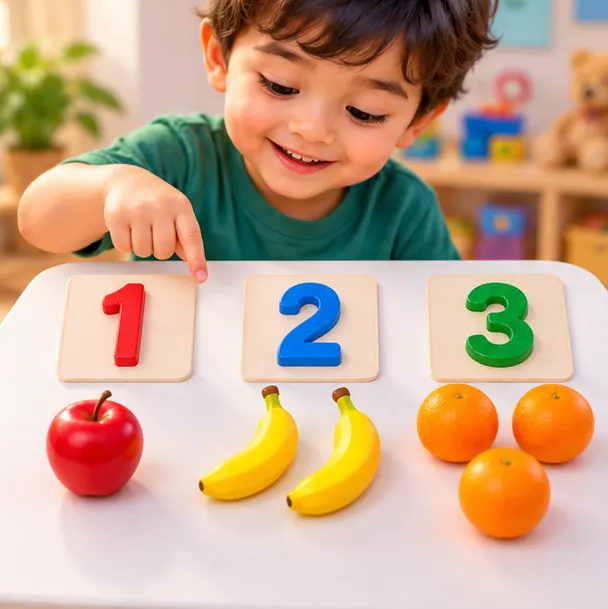
2. Number Hop or Point
Materials: Paper cards marked 1–10, placed on a clear floor or table.
How to play: Call a number. The child finds it by hopping, walking, pointing or tapping. Say the number aloud and count slowly together.
Try next: Start with 1–3, then add more cards when the child is comfortable. Keep the floor clear and supervise movement.
SHAPES · 5–10 MIN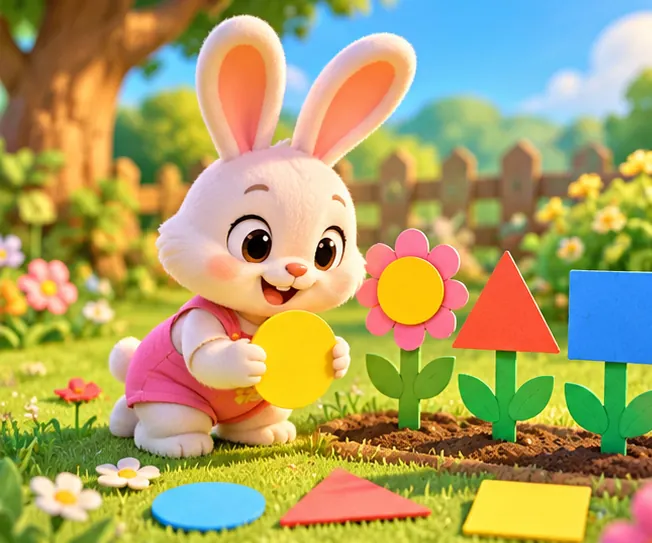
3. Shape Detective
Materials: Familiar objects in the room.
How to play: Search for a circle, square, rectangle and triangle. Talk about what you notice: corners, straight sides, or a curved edge.
Try next: Draw the shapes you found, or compare two objects that share a shape but have different sizes.
MOVEMENT & LANGUAGE · 5 MIN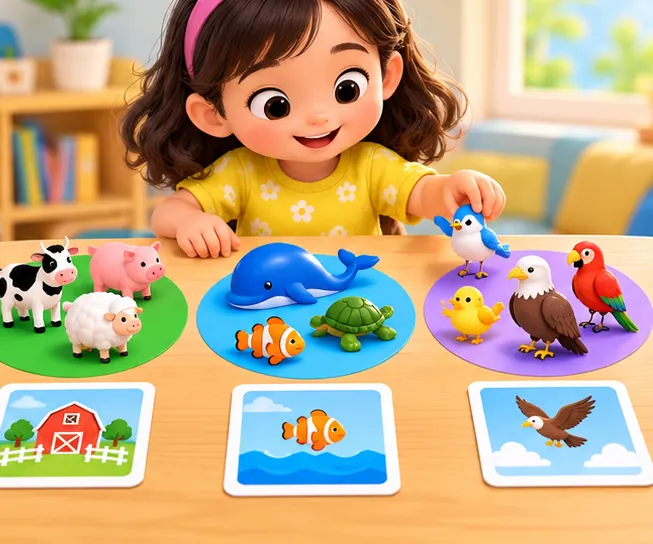
4. Animal Movement Game
Materials: None; leave enough clear space for safe movement.
How to play: Choose a familiar animal and invite the child to copy one safe movement or sound. Take turns choosing the next animal.
Try next: Ask, “What does this animal need to live?” or describe the animal using one or two words.
CLASSIFICATION · 5–15 MIN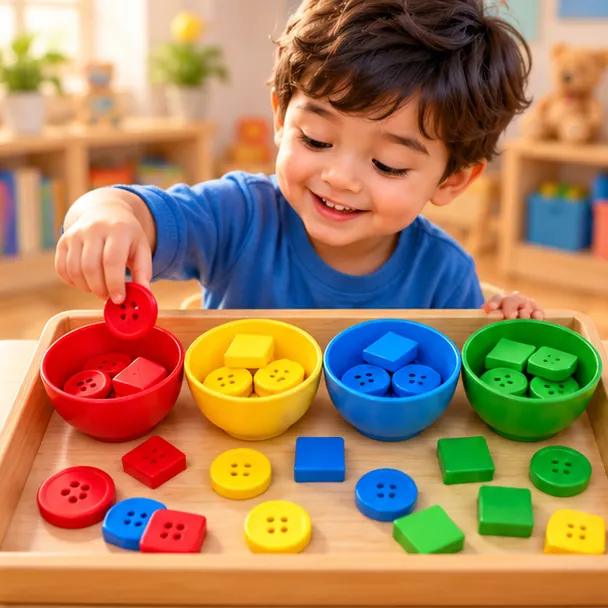
5. Simple Sorting
Materials: A small set of large, safe objects such as blocks or socks.
How to play: Sort the objects by one feature, such as color, size or shape. Explain the rule and ask the child to help place each item.
Try next: Mix the set and use a different rule. Avoid small objects that could be choking hazards for young children.
CREATIVITY & STORYTELLING · 10 MIN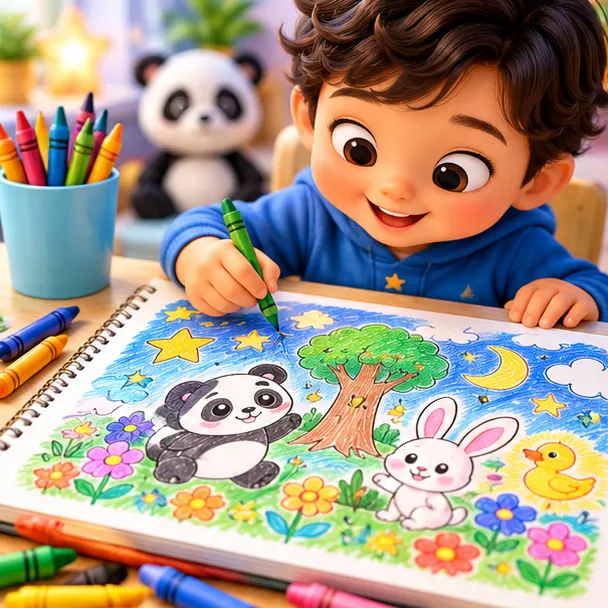
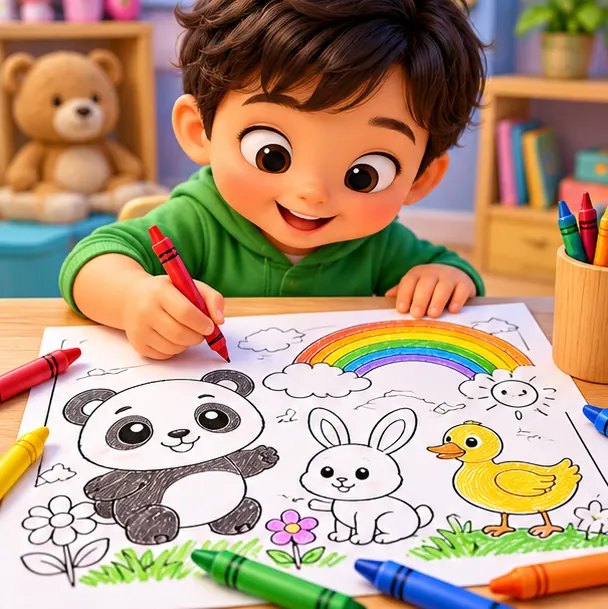
6. Story Drawing
Materials: Paper and crayons or pencils.
How to play: Tell a three-sentence story with a character, a place and a small problem. Invite the child to draw one moment, then explain what is happening in the picture.
Try next: Ask what might happen next and let the child add a new ending.
AUDITORY PATTERNS · 5 MIN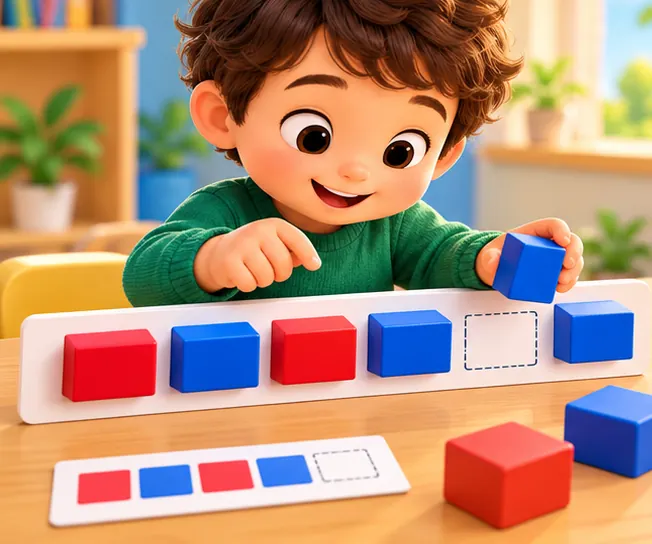
7. Rhythm Copycat
Materials: None; clapping or gentle tapping is enough.
How to play: Make a short pattern such as clap–clap–pause. Invite the child to copy it, then swap roles so the child creates a pattern for you.
Try next: Make the pattern slower or shorter if it is tricky. Use a quiet voice and comfortable volume.
COUNTING · 5–10 MIN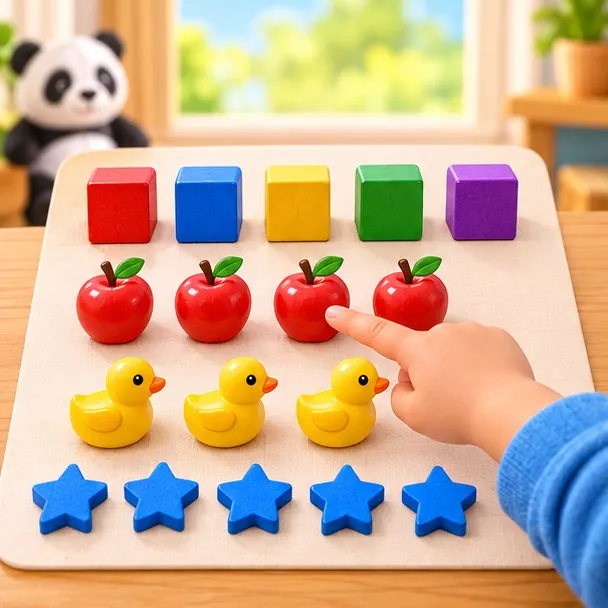
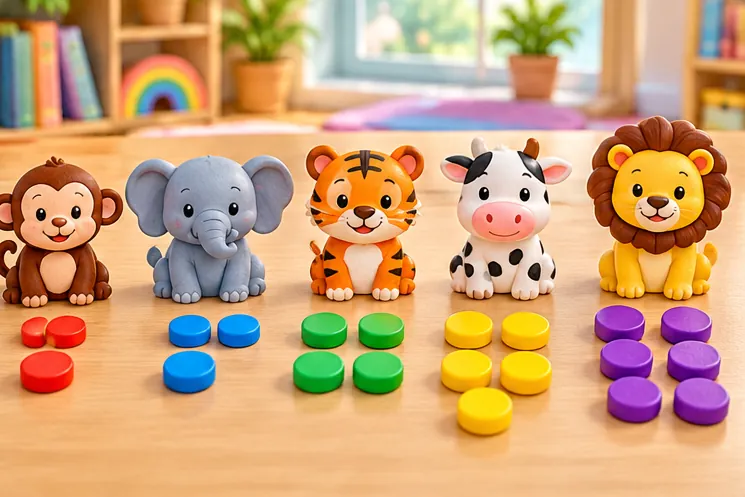
8. Toy Count
Materials: A small group of the child's toys.
How to play: Put out a few toys and touch or move one item for each number said aloud. At the end, ask “How many toys are in the group?”
Try next: Add one toy or take one away, then count again. Match the group size to the child's confidence.
ORDERING & OBSERVATION · 5–10 MIN9. Color Sequence
Materials: Large crayons or colored objects.
How to play: Arrange three or four colors in a row. Name them from left to right and invite the child to make a new row or find an object that matches one color.
Try next: Make a repeating pattern such as red–blue–red–blue and ask what might come next.
SEQUENCING & REASONING · 5–10 MIN10. What Comes Next?
Materials: Paper shapes, blocks, or drawings.
How to play: Make a simple repeating pattern, such as circle–square–circle–square. Pause before the final spot and ask the child to choose what belongs there.
Try next: Invite the child to create a pattern for you to solve and explain how they decided on the answer.
Make the activity fit the child
Offer choices, demonstrate one example, and allow a child to answer by speaking, pointing, moving or drawing. Stop if the child becomes tired or frustrated and try another day. Keep close adult supervision for movement, cutting, small objects and any materials that are not intended to be mouthed.
For step-by-step number activities, continue to Counting 1–10 or try the Number Adventure game. For screen-free prompts, visit Printables.