Start with a smaller step
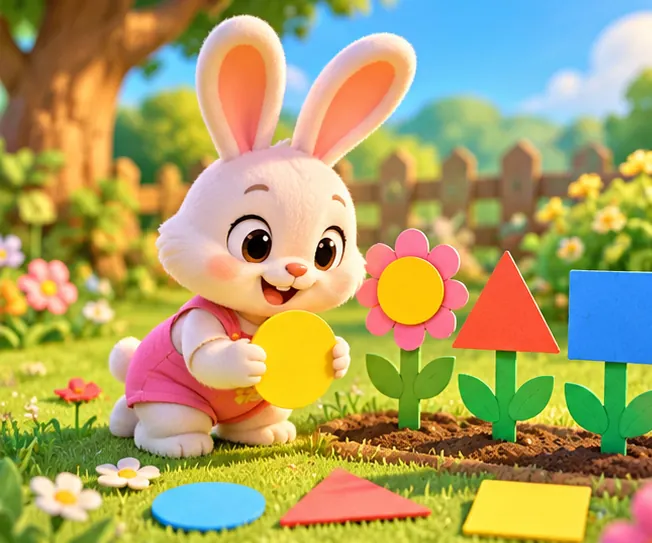
Use two colors and repeat the pair twice. Say the pattern aloud while pointing to each object.
Help Lumi-Web Build the Perfect Pattern
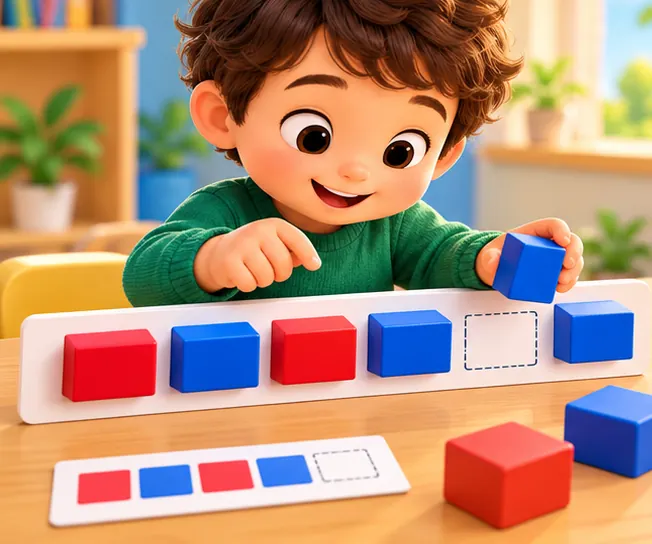
Notice repeating patterns, predict what comes next and create simple patterns independently.
Lumi-Web is weaving a magical web using repeating colors and shapes. Help decide what thread should come next.
Invite the child to choose two colors for Lumi-Web’s next row. Ask them to show the repeating unit with blocks, then let them invent a pattern for you to continue.
Build a short repeating pattern of four to six items, such as red-blue-red-blue. Make the repeating unit easy to see before hiding anything.
Goal: Notice what repeats, predict what comes next, and explain the rule in a pattern.
Begin with a short row that has one easy-to-spot repeating unit. Point to each piece in order, pause before the final space, and invite the child to explain their prediction.
Arrange red, blue, red, blue blocks in a row. Point along the row and name each color. Ask the child what they notice before filling a gap.
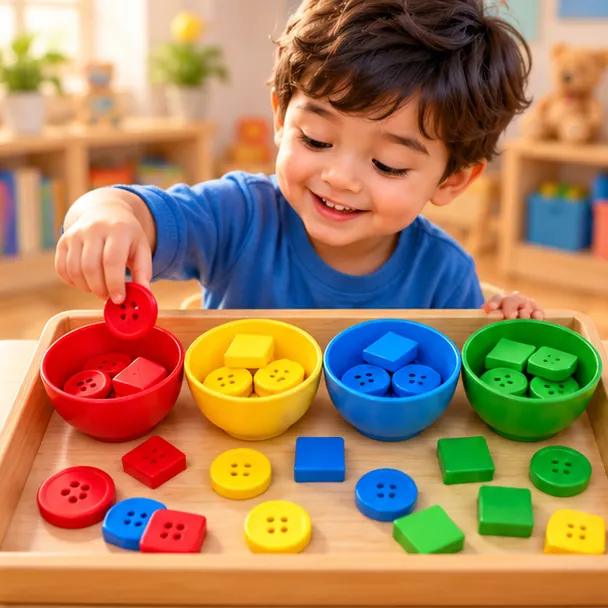
Cover the last place or leave a space after the pattern. Ask what could come next, then reveal the original or add the child’s choice to test whether it keeps the rule.
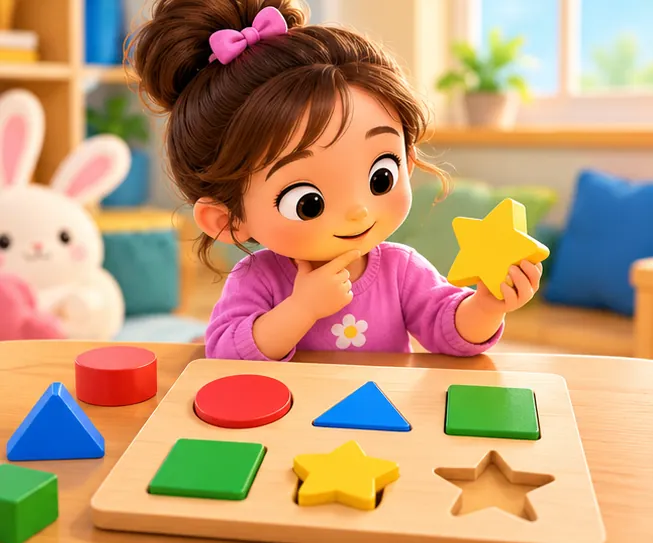
Invite the child to describe the repeating part—“one red, one blue.” Rebuild the row in a new place so the child must use the rule rather than memorize the layout.
Place four blocks in an AB pattern and leave one space. Let the child choose the next block and explain the choice. Add one more block to see whether the pattern continues.
“Which part repeats?”
“How can we test whether your next block fits the rule?”
Build a red-blue-red-blue row, then remove one block. Ask the child to choose which block belongs in the gap and explain the rule.
Ask: What repeats, and how did you decide?
Make a pattern with movements or sounds: clap, tap, clap, tap. Then let the child create a pattern for someone else to copy.
“Which part repeats?”
“How can we test whether your next block fits the rule?”
Use two colors and repeat the pair twice. Say the pattern aloud while pointing to each object.
Try a pattern such as red-red-blue, red-red-blue, or use three kinds of objects. Let the child invent a rule and ask an adult to continue it.
A pattern is defined by its rule, not one correct-looking arrangement. If the child suggests a different rule, ask them to show how it would continue rather than rejecting it immediately.
Explore more Thinking & Logic activities that practise noticing rules, remembering details and putting ideas in order.
Screen-Free
Use Pattern Builder to complete a missing piece, then draw a second pattern of your own.
For Adults
Ask the child to explain the repeating unit. If they suggest a different rule, test whether the whole row follows it.
After completing the red-blue pattern, invite the child to create a new rule with claps, taps or three different objects. The Thinking & Logic collection offers another way to practise noticing what comes next.
Explore Related Activities →Complete the pattern by choosing the piece that keeps the repeating rule. Try the next round only when the current pattern is clear; the printable below offers a paper-based follow-up.
For a screen-free round, print Pattern Builder in A4 or US Letter. The child can mark the missing piece and draw a new repeating pattern on the same sheet.
Try Pattern Play for eight rounds that progress from simple alternation to three-shape rules.
Complete repeating patterns by drawing or coloring the missing shape.
The Pattern Builder sheet asks children to complete repeating sequences and add or color the missing shape. Start with the first row together, then let the child try another row independently.