Start with a smaller step
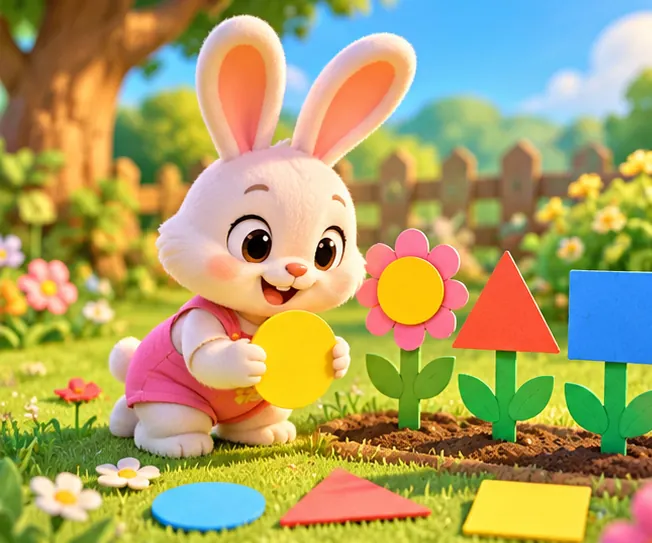
Use just two categories and only four cards. Put one example on each mat and let the child match the remaining pictures.
Organize the Magic Garden
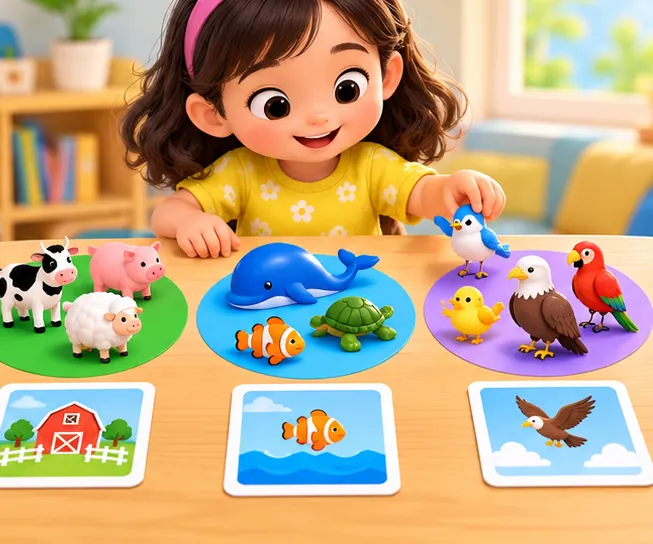
Group objects using color, shape, size or another shared feature, then switch the sorting rule.
Bloom Bunny and Lumi-Web need help organizing a garden collection.
Bloom Bunny and Lumi-Web have collected pictures from different places. Ask the child to choose the clue for each group—where an animal lives, how it moves or another visible feature—and explain each choice.
Pick one sorting rule that can be explained in a sentence—for example, farm animals and ocean animals. Show one example for each group.
Goal: Group objects by a shared feature and explain why each item belongs in a category.
Choose one sorting rule and name it before the child begins. Model one example for each group, then offer one picture at a time so the child can explain where it belongs.
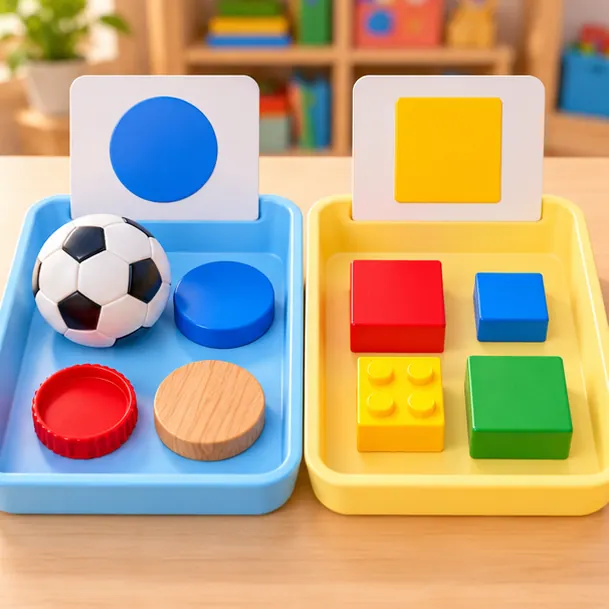
Place a farm-animal picture on one mat and an ocean-animal picture on another. State the rule in plain language and ask the child what clues help tell them apart.
Give one card at a time. The child can point, place it, or explain where it belongs. If a card could fit more than one sensible group, pause and discuss the clue you are using.
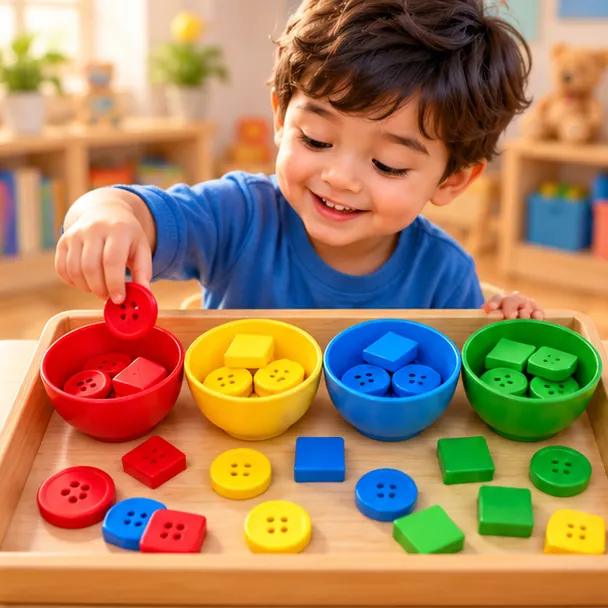
When the first groups are complete, choose a different rule such as animals that fly and animals that do not. Notice that the same object may move groups because the rule changed.
Use a cow, sheep, fish, whale and bird picture. Group farm animals and ocean animals first; keep the bird aside if it does not fit either rule, then create a flying-animal category.
“What do these two items have in common?”
“Would this item fit if we changed the rule?”
Choose six animal pictures. First group them by where they might live; then regroup them by how they move or whether they have wings.
Ask: Which sorting rule are we using now?
Sort safe household objects by how they are used—things for drawing, things for building—or by a visible feature such as shape. Ask the child to invent a rule for you.
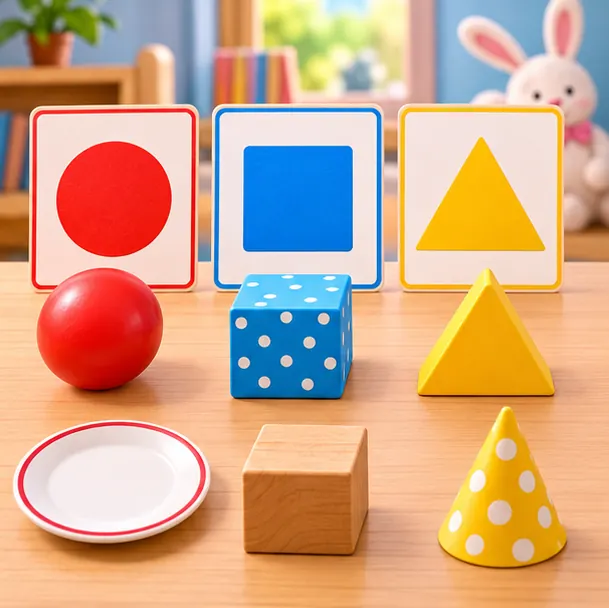
“What do these two items have in common?”
“Would this item fit if we changed the rule?”
Use just two categories and only four cards. Put one example on each mat and let the child match the remaining pictures.
Ask the child to find two different ways to classify the same set. They might group animals by habitat first and by number of legs next.
Categories can depend on the rule and context; avoid treating every difficult example as simply right or wrong. Use pictures or large objects, not small pieces that could be mouthed.
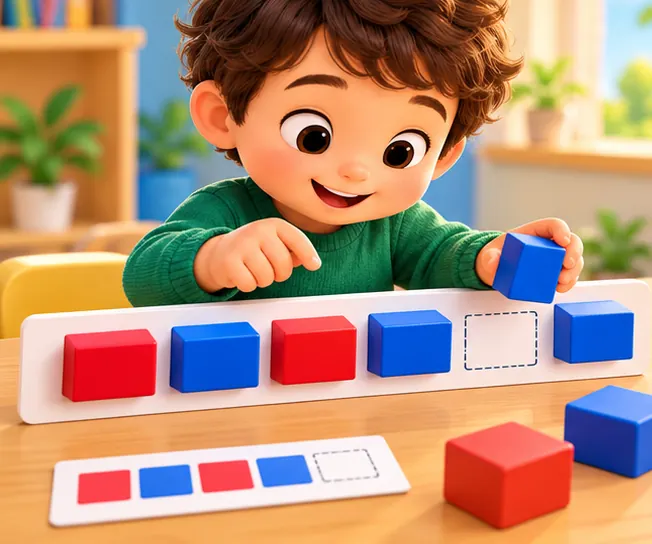
Explore Early Math and Thinking & Logic activities that build comparison, grouping and reasoning skills.
Screen-Free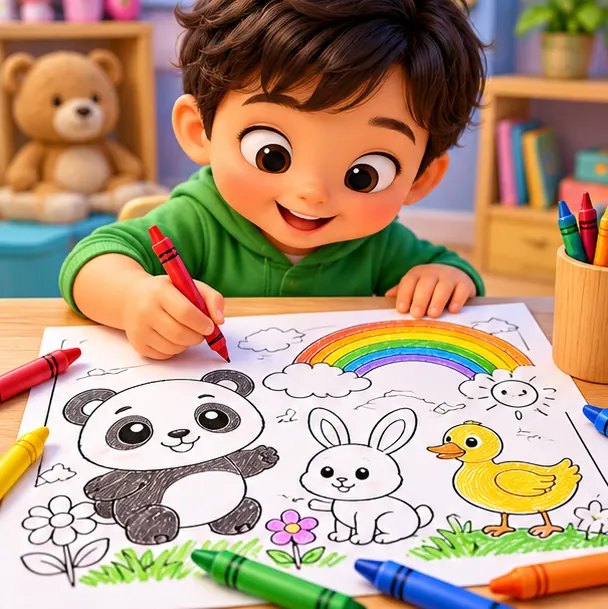
Use Sort the Everyday Things to group pictures by a shared feature and explain the rule used.
For Adults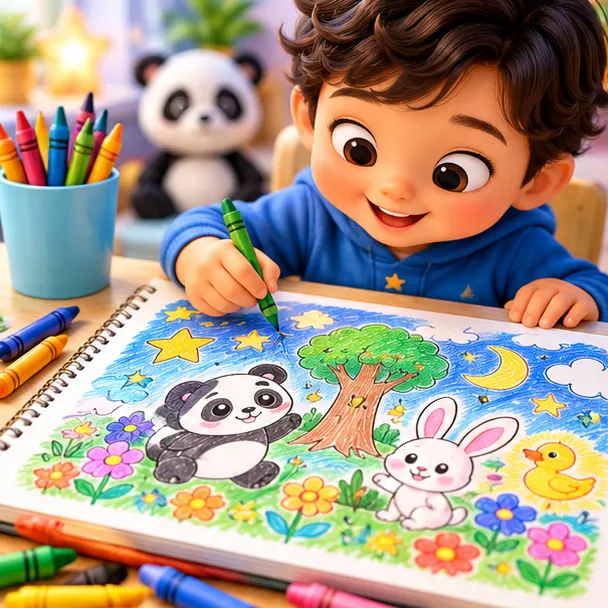
If an object could fit more than one group, name the rule you are using and discuss the clue that supports the choice.
After sorting by habitat, mix the same cards and choose a different rule, such as how the animals move. Ask the child to explain why a picture changes groups.
Explore Related Activities →Sort the animal pictures using the category shown in the game. When a group is complete, look back at the pictures and say the shared feature that connects them.
Print Sort the Everyday Things in A4 or US Letter for another sorting round. Ask the child to name the category rule before placing or connecting each picture.
Sort familiar objects into groups, then explain one of your choices.
This worksheet gives children picture groups to sort and discuss. Encourage them to name the shared feature—such as where something belongs or what it is used for—before completing the task.