Start with a smaller step
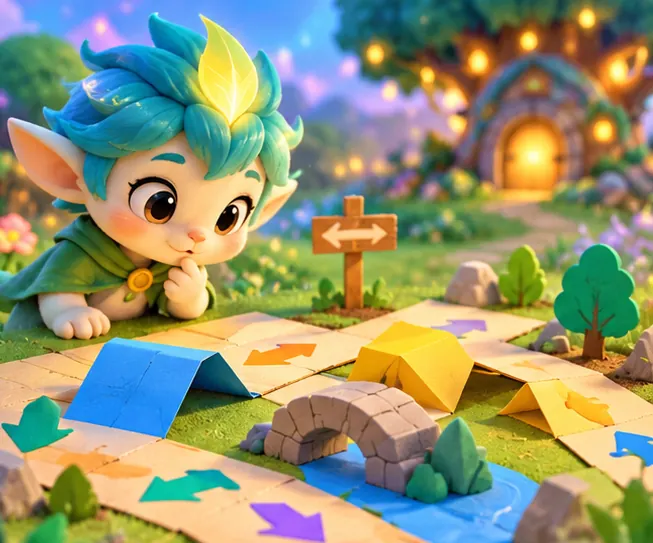
Use a 3-by-3 grid with no blocked squares and move a toy or finger one square at a time.
Panda’s Big Thinking Challenge
Use simple clues, comparisons and elimination to solve beginner-friendly logic challenges.
Panda has several paths or doors and a clue that helps narrow the choices. Think carefully before choosing.
Starlight Panda needs a safe route through the garden. Invite the child to find the start and destination, look for blocked spaces and explain which path could work.
Draw a small 4-by-4 grid. Mark a start and finish and only one or two blocked spaces. Agree that movement is up, down, left or right, not diagonally.
Goal: Plan a route, use direction words, and change a plan when a move is blocked.
Look at the whole grid before moving. Find the starting point and destination, then plan a route that avoids blocked spaces; change the route if it reaches a dead end.
Point to the start and finish. Ask the child to look for blocked squares before moving; trace a possible route with a finger first.
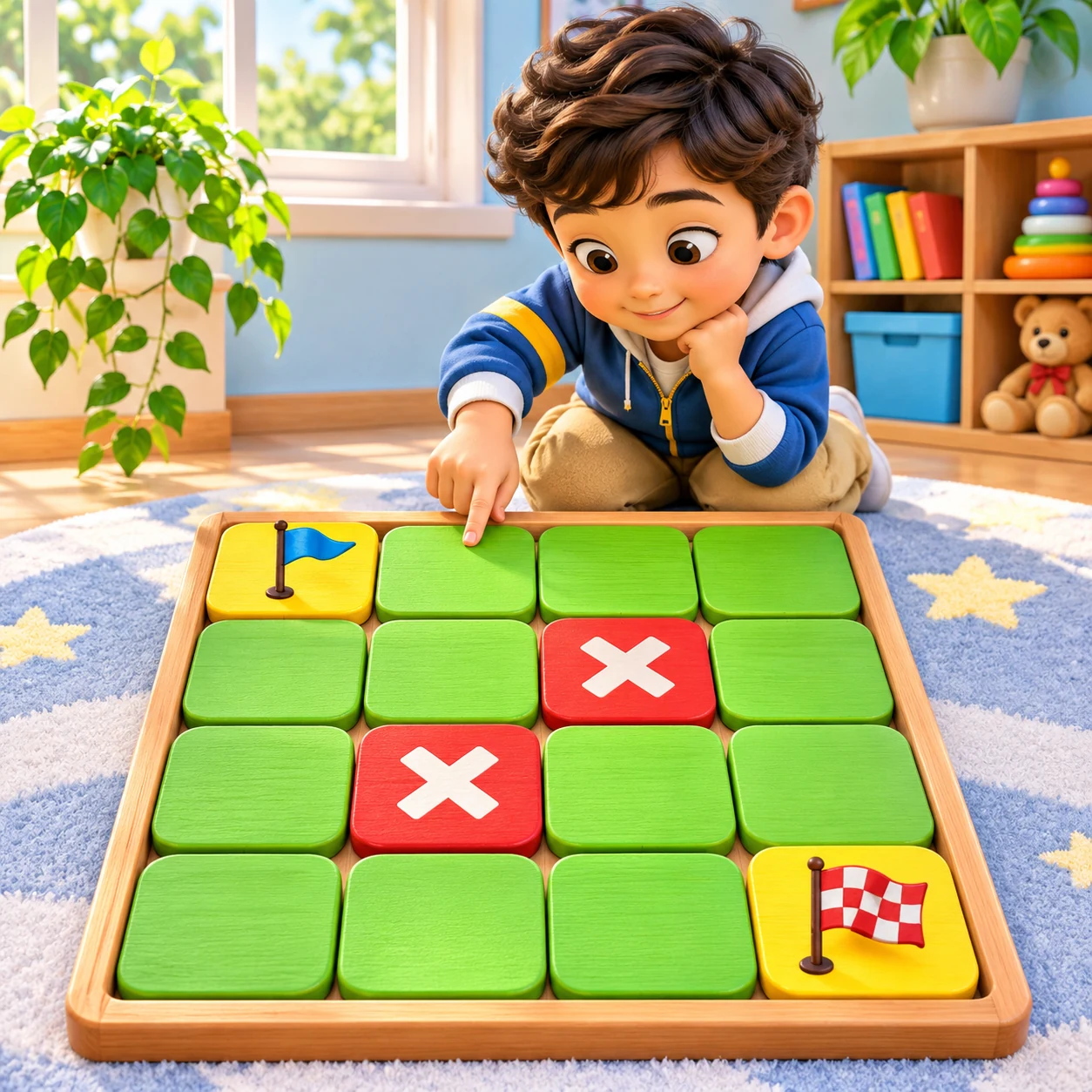
Move the finger one square up, down, left or right. Stop before a blocked square and try another direction. If the path works, trace it with a pencil or use large arrow cards to record the moves.
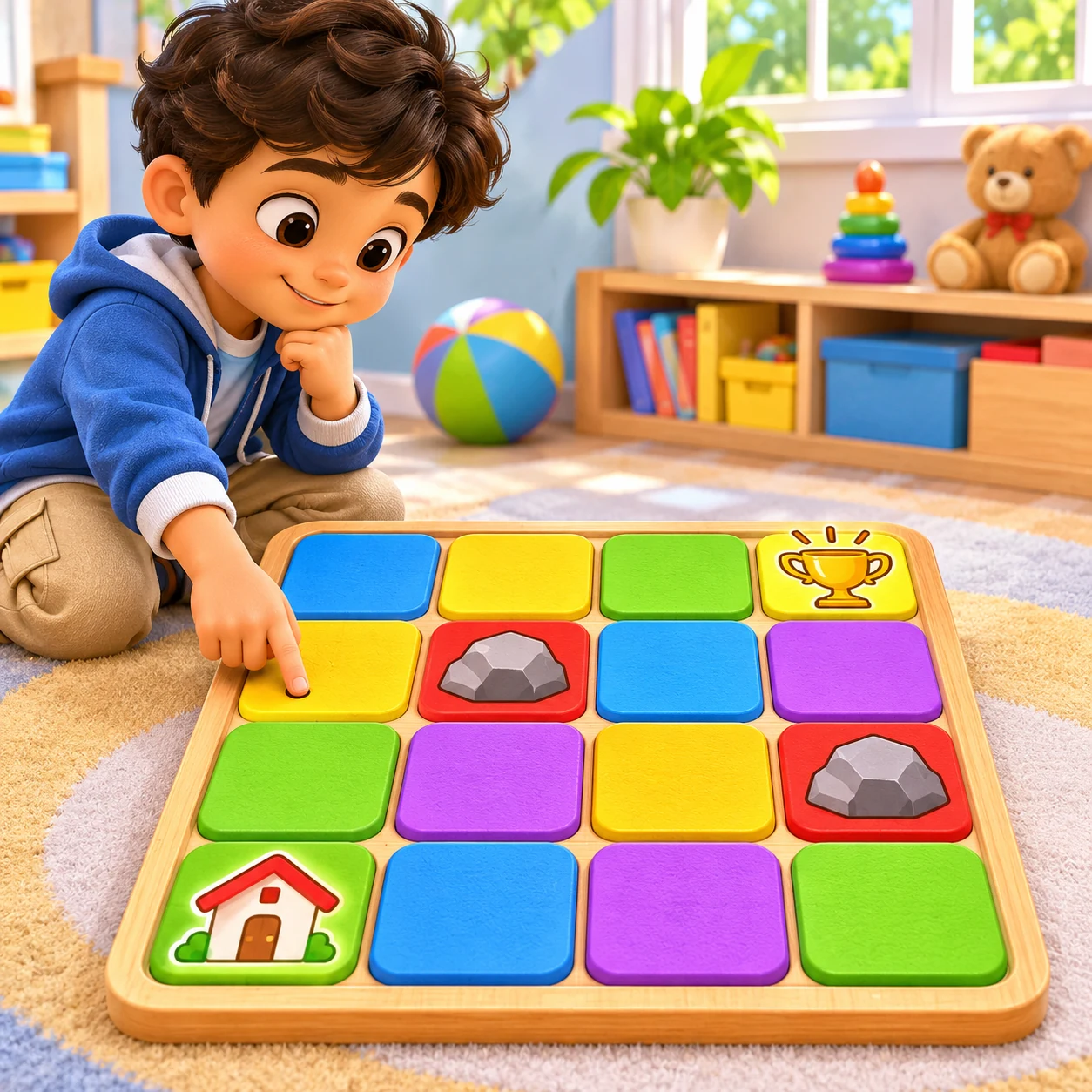
Follow the recorded route from the start to see whether it reaches the finish. If it does not, locate the first move that fails, change that move, and try again.
Draw a start at the lower-left and a finish at the upper-right, then block one middle square. Ask the child to trace a safe route around the block and describe the direction changes.
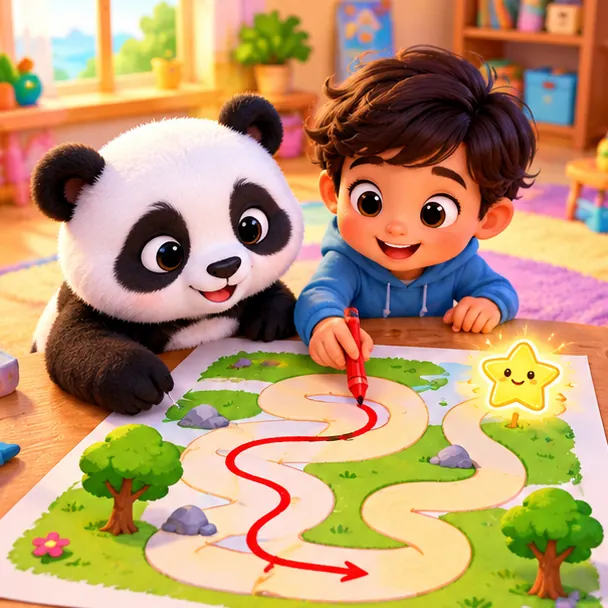
“Where would this move take us?”
“Which move should we change first?”
Draw a small 4-by-4 grid, mark a start and finish, then block two squares. Trace a route with a finger before drawing it.
Ask: Which turn helped you avoid the blocked square?
Let the child create a grid for an adult, adding only one or two blocked squares. The adult must explain the plan aloud and test it; the child can say whether the route follows the rules.
“Where would this move take us?”
“Which move should we change first?”
Use a 3-by-3 grid with no blocked squares and move a toy or finger one square at a time.
Add another obstacle or ask the child to give verbal directions without tracing first, then test the directions to see whether they work.
Treat a blocked path as information, not failure. Keep grids large enough to follow comfortably and use paper marks instead of small tokens with children who may mouth objects.
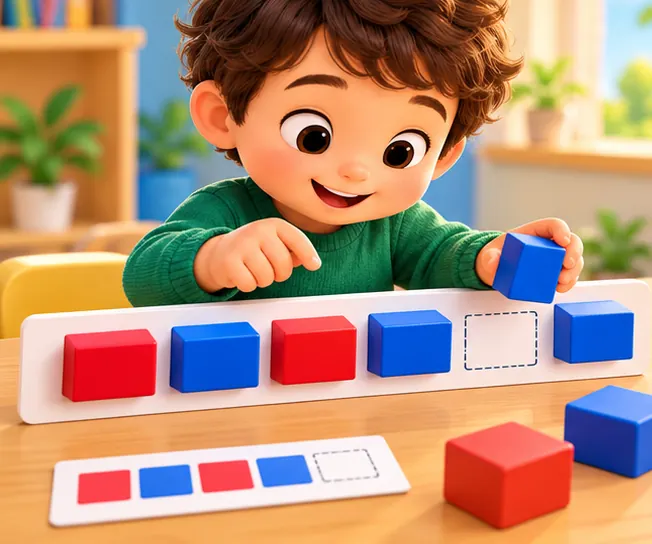
Explore Thinking & Logic activities that practise planning, patterns, memory and step-by-step reasoning.
Screen-Free
The Folo Grid-Route Challenge gives children a paper maze to plan, trace and check one move at a time. Pattern Builder remains available as a separate pattern-rule activity.
For Adults
Ask the child to describe a route before trying it. Encourage them to explain why a blocked path will not reach the destination.
After the child finds one route, ask whether another route could also reach the destination. Invite them to compare the paths and explain which has fewer turns or avoids more obstacles.
Explore Related Activities →Plan a route from the marked start to the destination while avoiding blocked spaces. Try one move at a time and review the path if it reaches a dead end.
The linked Pattern Builder is a paper-based logic extension, not a printed maze. Use it to practise identifying a rule while the online game focuses on route planning.
Guide Panda around blocked squares, then compare moves and turns across three different mazes.
Plan a route from START to FINISH, avoid the blocked squares and record the moves in order.
Folo’s Grid-Route Challenge is a paper-based maze that matches the route-planning skill practised in Maze Mission. Trace the route with a finger before recording the moves.