1. Create freely
Offer a prompt such as “draw a place where a lost star might land.” Let the child choose the characters, colors and details. There is no single correct result.
Imagine it. Create it. Tell the story! 🎨✨
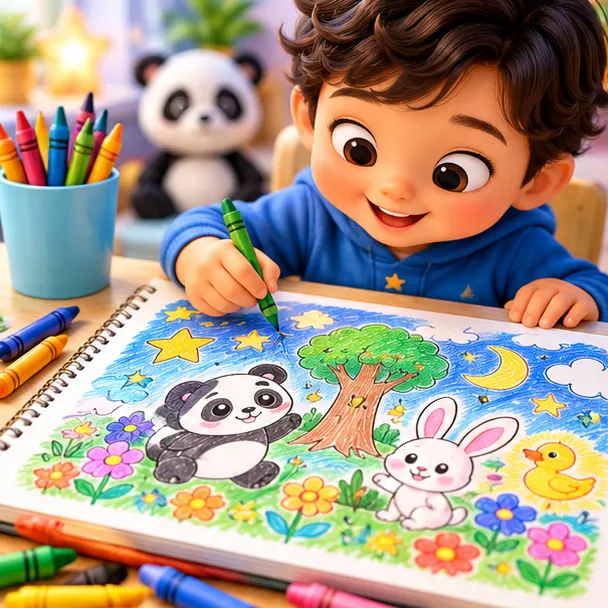
Drawing, cutting, matching, coloring and storytelling activities that combine creativity with practical fine-motor practice. Follow the activities in order when you want a gradual progression, or choose one based on your child's interest today.
Open the full activity for examples, guided play, an extension challenge and a parent or educator tip.
Open activity →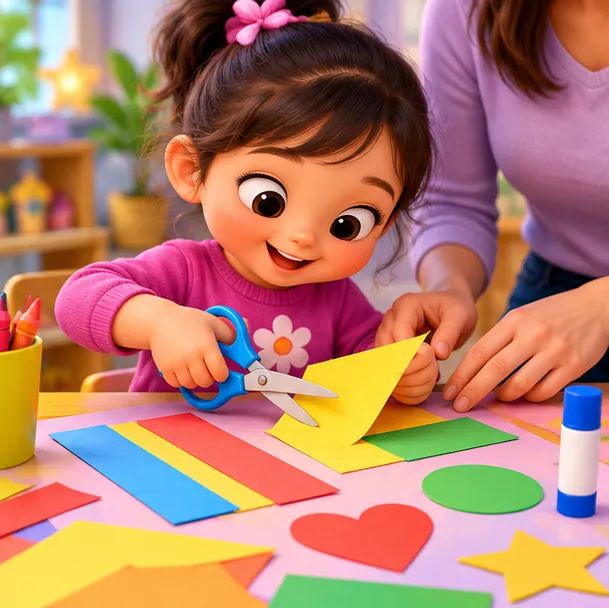
Open the full activity for examples, guided play, an extension challenge and a parent or educator tip.
Open activity →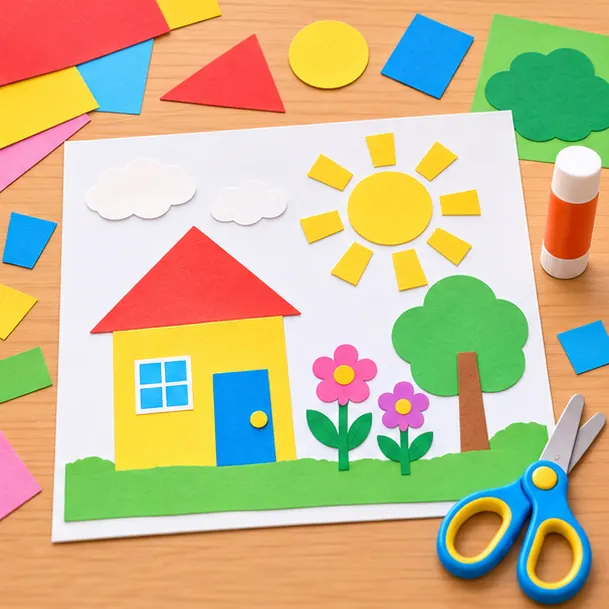
Open the full activity for examples, guided play, an extension challenge and a parent or educator tip.
Open activity →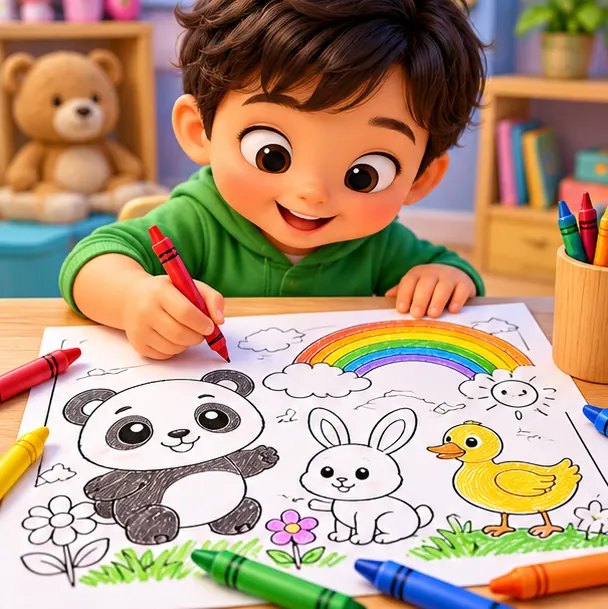
Open the full activity for examples, guided play, an extension challenge and a parent or educator tip.
Open activity →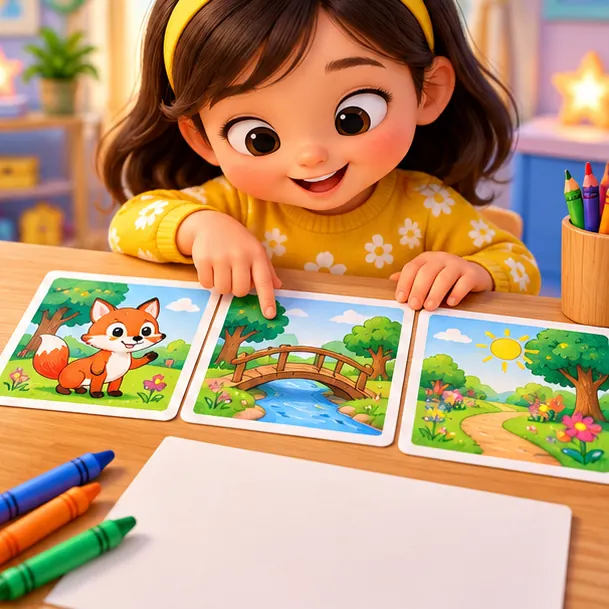
Open the full activity for examples, guided play, an extension challenge and a parent or educator tip.
Open activity →There is no single correct picture. Ask the child to explain what they created.
Move from large, simple movements toward smaller, more controlled cutting or drawing tasks.
Offer a few materials or characters and let the child decide what to combine.
Use the child's picture or craft as a starting point for conversation and pretend play.
Short, positive practice is enough. Follow the child's attention, give them time to answer, and celebrate careful thinking and effort.
Use plain paper and whatever age-appropriate drawing tools you already have. The goal is to support choice and communication, not to produce a perfect picture.
Offer a prompt such as “draw a place where a lost star might land.” Let the child choose the characters, colors and details. There is no single correct result.
Ask the child to describe one part of the picture. You can write down their words or ask what might happen next. Respect a child who prefers pointing or quiet drawing.
Draw a path, match a few large paper shapes, or fold a sheet to make a simple scene. Use child-safe scissors only with close adult supervision; offer tearing or pre-cut shapes as alternatives.
For younger children or anyone who finds small movements challenging, use large paper, thick crayons, stickers that are age-appropriate, or adult-prepared shapes. A verbal story or pointing activity can be just as meaningful as cutting or coloring.
Explore another learning path or visit a Kids4U story for a playful change of pace.
Back to Learn & Play →Build a story starter from your own character, setting, problem and ending choices. When you're ready, use the printable version below for extra practice away from the screen.
Need a paper copy? Choose A4 or US Letter in the printable section below. No answers or personal details are sent anywhere.
Draw a story map, invent a three-scene adventure, or color a scene and continue it with a new idea.