Start with a smaller step
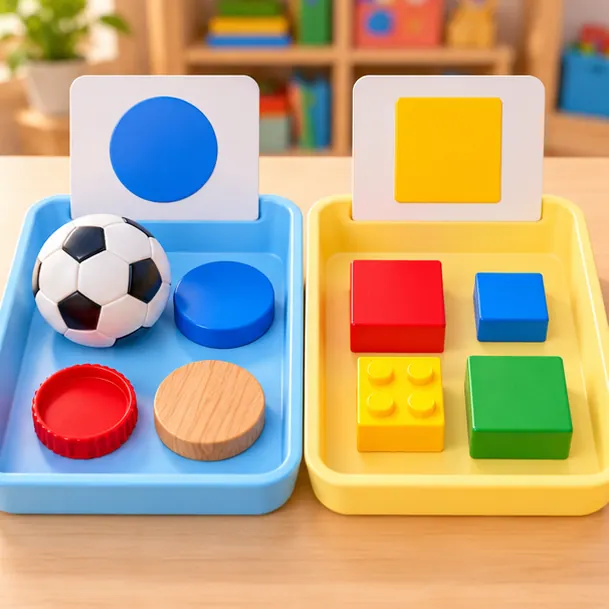
Match only two shapes and use same-color shapes first. Outline matching can be done by placing one cut-out over a same-size outline.
Bloom Bunny’s Shape Match
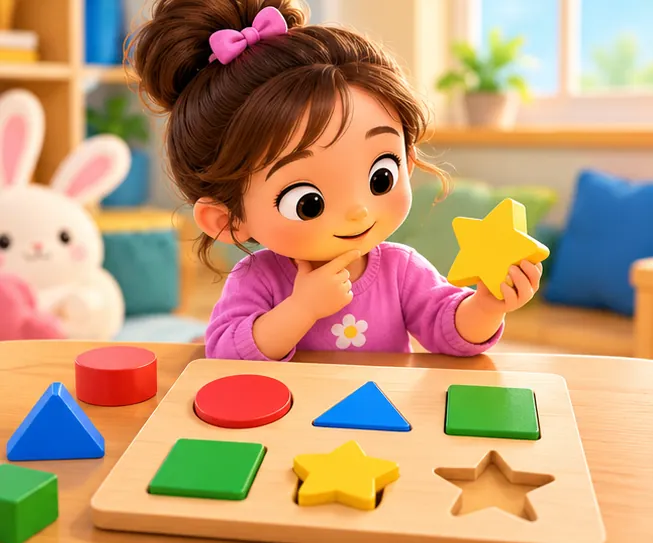
Match shapes with identical shapes and with familiar objects that share the same basic form.
Bloom Bunny has a basket of shape cards and needs help pairing them with matching garden objects.
Bloom Bunny has shape cards for the garden. Invite the child to find an object with a similar outline, then turn the card to show that a shape can face a different direction and still match.
Put out three shape cards and a small selection of object pictures. Leave room between choices and keep the number of options low at first.
Goal: Match shapes by their outlines, even when the size, color or direction changes.
Put out two or three large shape cards and a small number of familiar object pictures. Compare outlines, sides and corners before adding more choices.
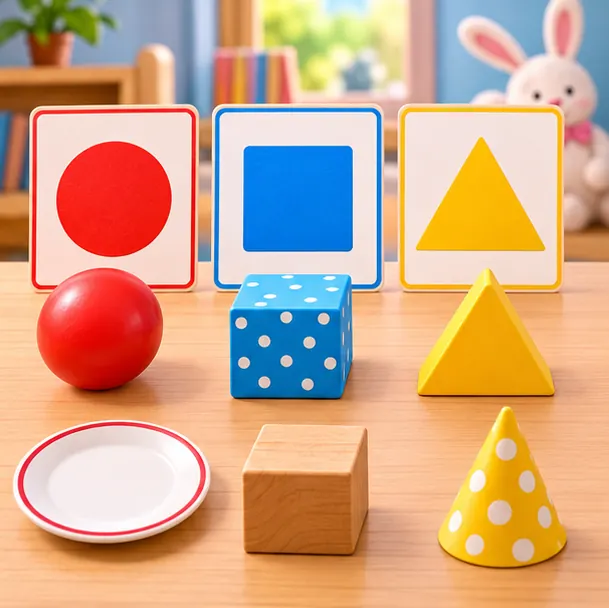
Trace around a shape card with a finger. Describe its useful clues—for example, a triangle has three straight sides and three corners.
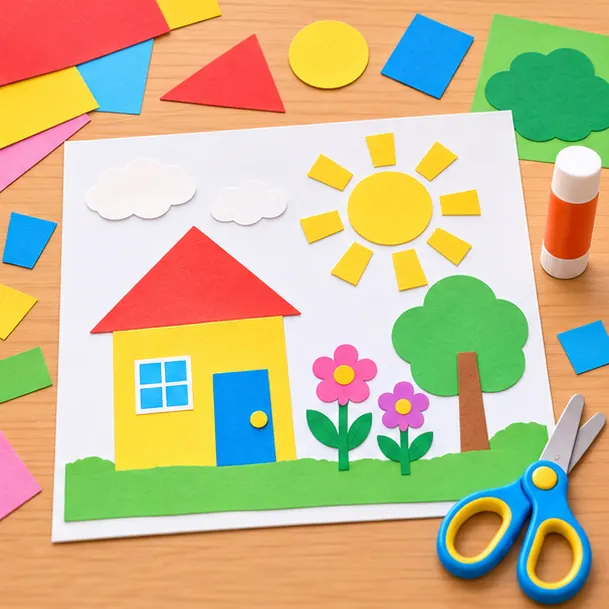
Ask the child to place a shape card beside an object or picture with a similar outline. Rotate the card if needed; a triangle pointing sideways is still a triangle.
Find a second item that matches the same shape. If a choice is close but not exact, compare sides and corners rather than judging by color alone.
Put out a square card, a triangle card and a circle card. Offer pictures of a window, a slice of pizza and a plate. Match the window to the square, then point out the corners that helped.
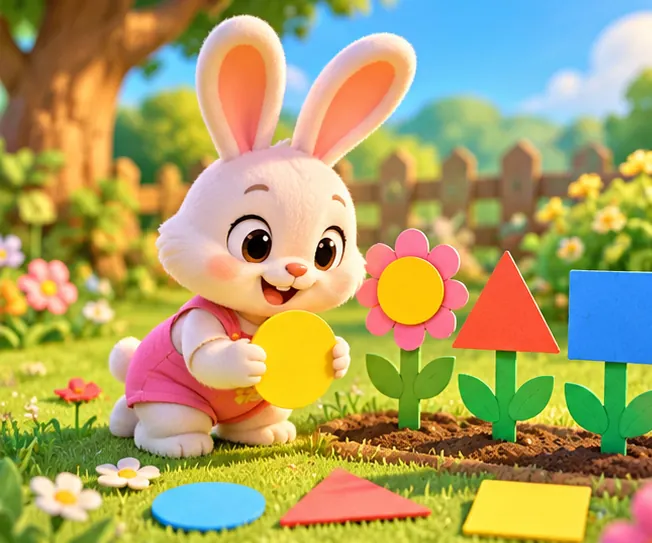
“How many corners can you find?”
“Would this match if we turned the card?”
Pick a square card and find a safe object with a square face. Compare the corners, then repeat with a circle or triangle.
Ask: Does the shape still match if the object is a different size?
Make a shape collage from paper cut-outs. Group matching shapes even if one is large and another small, then ask the child to choose a different color for each group.
“How many corners can you find?”
“Would this match if we turned the card?”
Match only two shapes and use same-color shapes first. Outline matching can be done by placing one cut-out over a same-size outline.
Use mixed colors and sizes, then ask the child to sort all examples by shape. Invite the child to make a confusing example and explain how to decide.
The purpose is noticing outlines, not making perfect drawings. Avoid small cut-outs with children who may mouth items; an adult can prepare large shapes in advance.
Explore other Shapes & Colors activities that practise recognizing, comparing and finding shapes in familiar places.
Screen-Free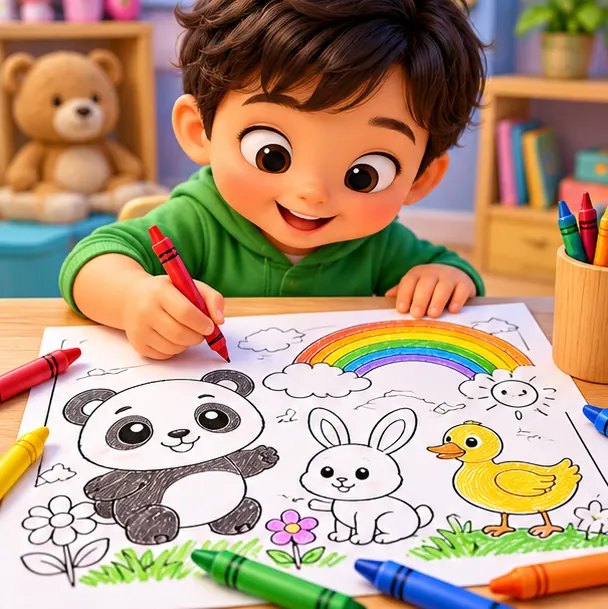
Use the shape-matching printable to connect each outline with a matching shape or object.
For Adults
Ask the child to describe the clue they noticed, such as a curved edge, a straight side or a corner.
After matching the cards, look for the same shapes in a room or garden. Try a shape hunt to see whether the child can recognize the outline in a new setting.
Explore Related Activities →Choose the shape that matches the target outline. Turn your attention to the sides and corners rather than relying on color or size.
Print the shape-matching activity in A4 or US Letter. The child can connect matching outlines on paper, then look for one example of each shape nearby.
Match everyday objects such as a plate, window, roof, book, clock and door to the shape each one resembles.
Use this sheet to compare shape outlines and find matching examples. Encourage the child to point out the sides, corners or curved edge that helped them decide.