Start with a smaller step
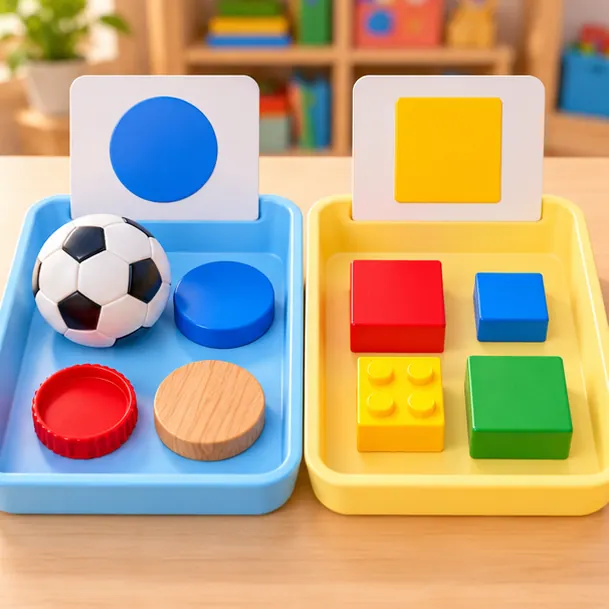
Hunt for only circles and squares with two example pictures to choose from. Let the child match or point rather than name every shape.
Bloom Bunny’s Shape Garden Hunt
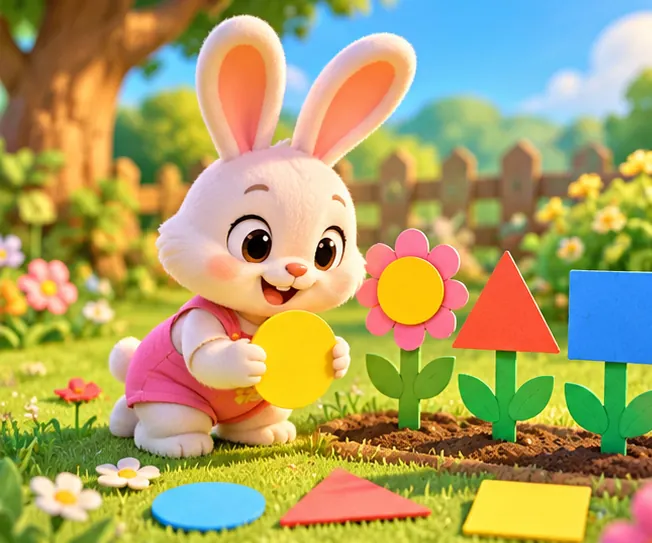
Recognize circles, squares, triangles and rectangles by looking for them in familiar objects.
Bloom Bunny is walking through a magical garden. Help spot a circle flower, a square stepping stone, a triangle sign and a rectangle gate.
Bloom Bunny is exploring the garden for shapes. Invite the child to find one shape at a time, point to its outline and explain which part of the object gives the clue.
Choose one shape first—such as a circle. Agree on the boundaries of the hunt and point out that objects can be left where they are if fragile, heavy or out of reach.
Goal: Recognize shapes in familiar places and describe a feature that makes an object fit.
Choose one shape to search for first. Agree on a safe area to explore, model one example and let the child point to or draw each new match.
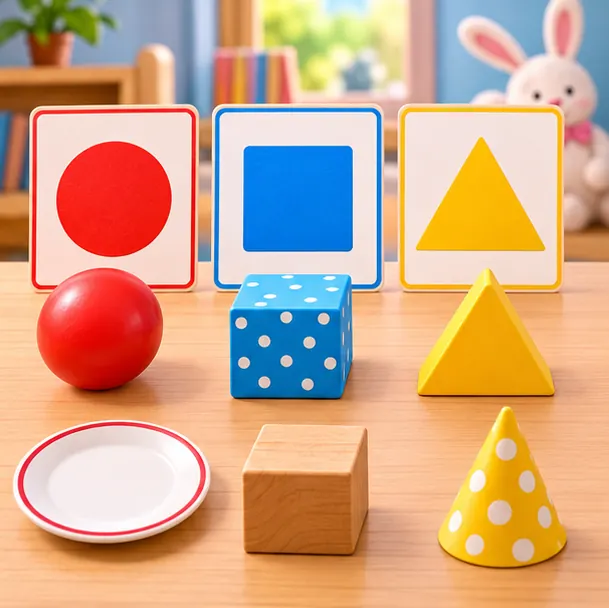
Show a simple circle, square, triangle or rectangle. Trace its edge with a finger and describe an observable feature, such as “round” or “three straight sides.”
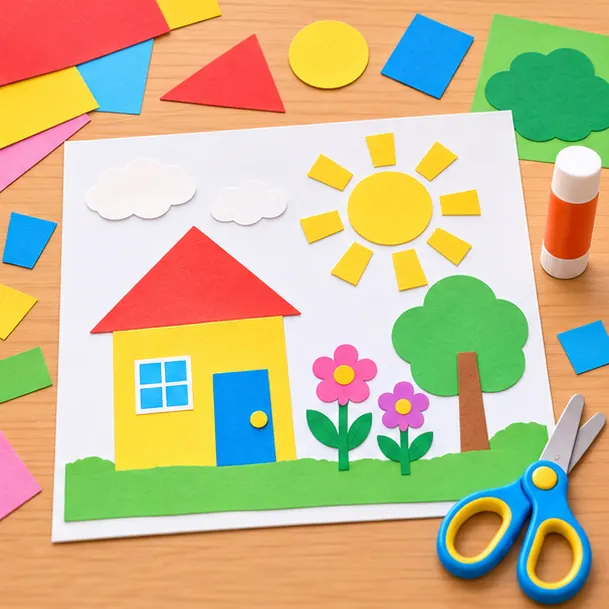
Find two or three safe examples. A clock face or plate may be circular; a book cover may be rectangular. Invite the child to point, draw or name a find instead of moving it.
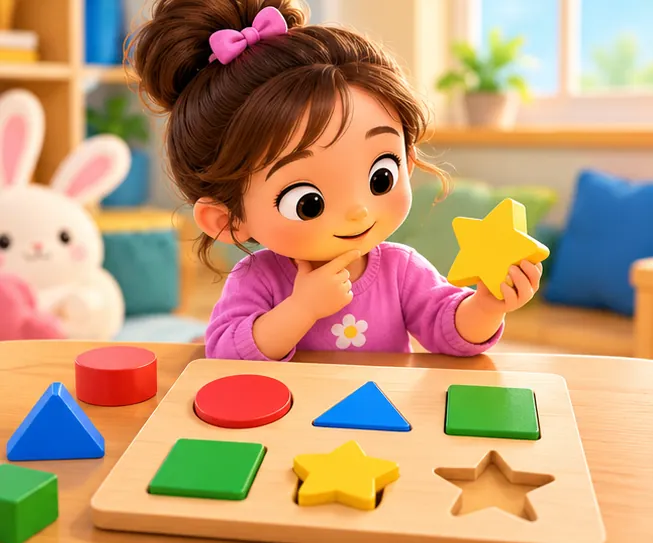
Compare two finds even if their colors and sizes differ. Ask what shape they share and whether another object could fit the same clue.
Pick a circle card and search for a plate, a wheel on a toy, and a round picture on a book. Draw one find or point to it, then compare its outline to the card.
“What part of the outline helped you decide?”
“Can you find the same shape in a different size?”
Choose a circle, a rectangle and a triangle card. Look for safe objects with similar outlines, then draw one object that you found.
Ask: What makes the object look like that shape?
Choose a second shape and compare it with the first. A child might find a red square and a blue square; talk about how the shape can stay the same even when color changes.
“What part of the outline helped you decide?”
“Can you find the same shape in a different size?”
Hunt for only circles and squares with two example pictures to choose from. Let the child match or point rather than name every shape.
Give a two-part clue, such as “Find something rectangular and blue.” Invite the child to create a clue for an adult to solve.
Keep the hunt in a safe, supervised area. Do not ask a child to climb or reach for objects. If a real object is irregular, describe the closest shape rather than insisting every item fits perfectly.
Explore the Shapes & Colors collection for matching and sorting activities that use the same shape vocabulary.
Screen-Free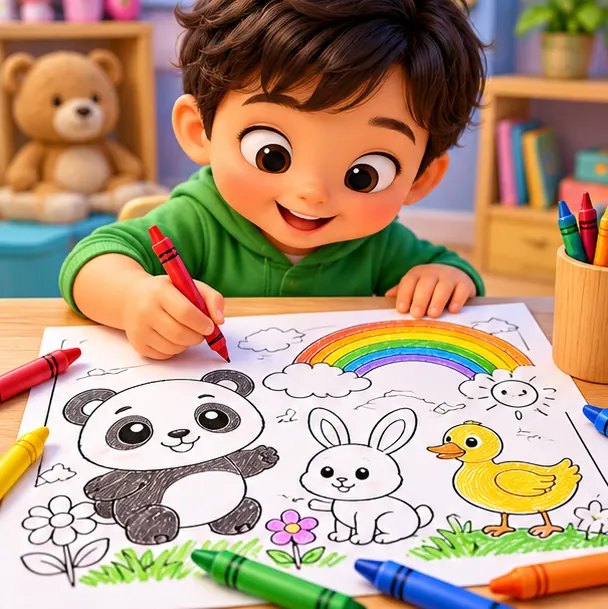
Use the shape-hunt printable to record objects found and the shapes noticed in their outlines.
For Adults
Choose safe, reachable objects and let the child explain why each one is a possible match.
After finding shapes in one room, try another safe area or switch the target shape. The child can draw one object they found and label its shape with adult help.
Explore Related Activities →Look for the requested shape in the pictures and select the matching example. After the game, try finding the same shape in a familiar room.
Print the shape-hunt sheet in A4 or US Letter to record real objects. The child can draw, point or dictate the name of each object they discover.
Color the shape trail, then tick off circles, squares, triangles and rectangles you can spot around your home.
Use this worksheet as a record of the shape hunt. Children can draw or note familiar objects and identify the shape they see in each object’s outline.