Start with a smaller step
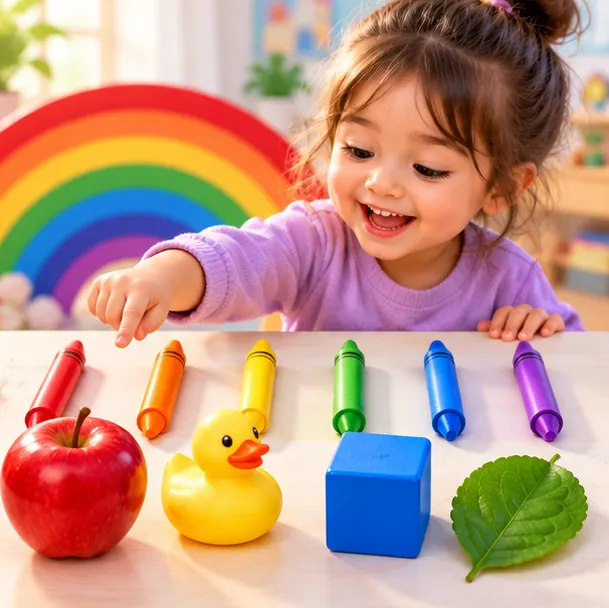
Use only two strongly contrasting colors and objects that are easy to tell apart. Let the child place or point without saying the color name.
Bloom Bunny’s Rainbow Garden
Recognize and name common colors, then match objects with the same color.
Bloom Bunny is preparing six garden baskets: red, yellow, blue, green, orange and purple.
Bloom Bunny is preparing garden baskets in different colors. Invite the child to choose an object, find the closest color card and explain which part of the object helped them decide.
Choose three or four clearly different colors to begin with. Put each color card where it can be seen, then select a small number of matching objects.
Goal: Match an object to a color, notice similarities, and describe choices using color words.
Start with three clearly different color cards and a few familiar objects. Say the color names, then match each object to a card; accept reasonable descriptions of shades.
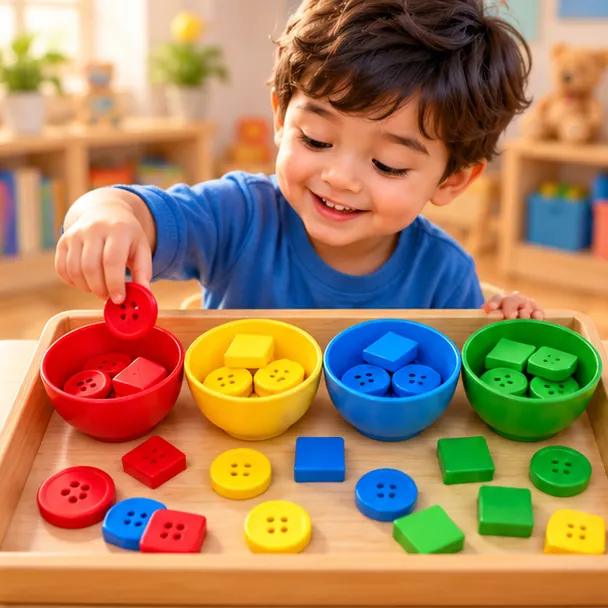
Place three color cards on the table. Say each color name and invite the child to point to one they recognize. The child can respond by pointing, matching or speaking.
Put an object beside the card that best matches its main color. Try a red apple picture, a blue block and a green leaf. Talk about close matches without demanding one exact shade.
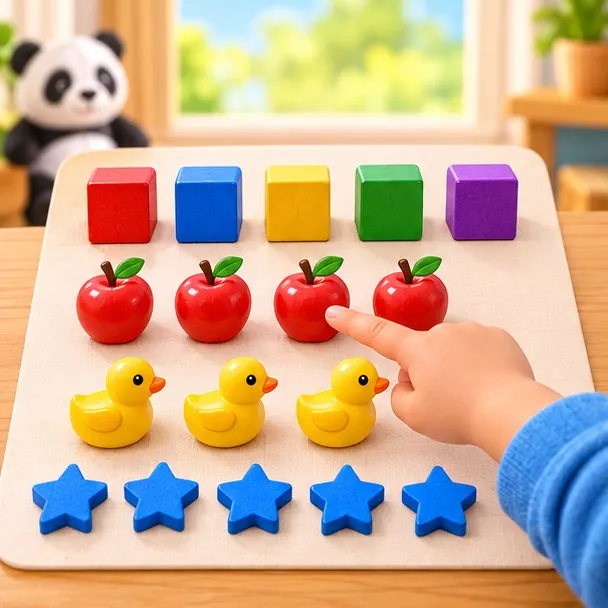
Change the order of the cards and try another round. Let the child choose an object for you to match; explaining why it belongs is part of the game.
Place red, yellow and blue cards in three spaces. Choose one safe object for each color, match it, then turn the objects around or exchange them for new examples.
“What part of the object looks like this color?”
“Can you find a different object with a similar color?”
Choose three colored objects and three matching cards or crayons. Match each object, then find one more object that belongs with each color.
Ask: Which clue tells you the colors match?
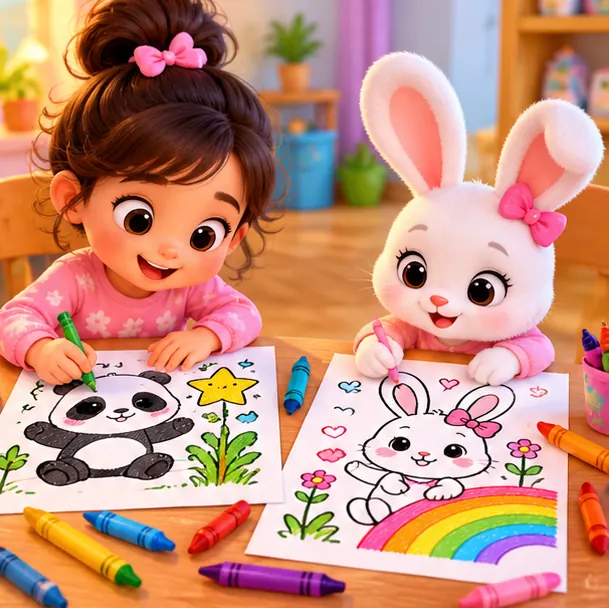
Look for a color during a walk around the room, then draw what was found. Combine color with another clue—such as a round red object—so the activity includes observation beyond color alone.
“What part of the object looks like this color?”
“Can you find a different object with a similar color?”
Use only two strongly contrasting colors and objects that are easy to tell apart. Let the child place or point without saying the color name.
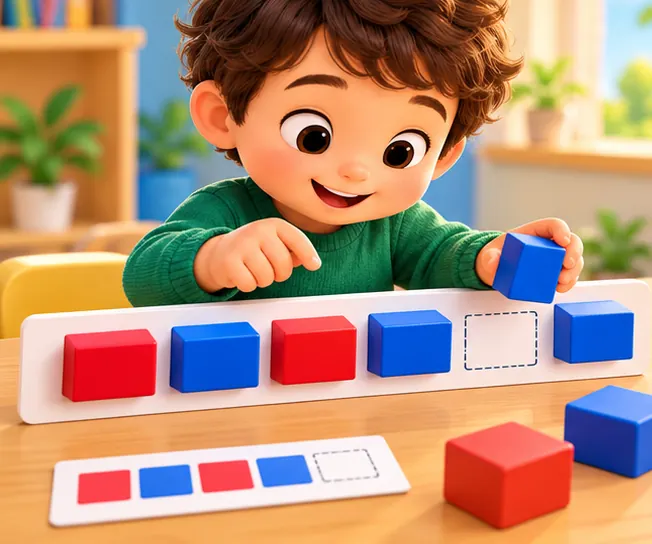
Ask the child to group several objects by color, then select one object that could fit a different group depending on which part you look at.
Lighting can change how colors appear. Accept reasonable descriptions of shades and use shape, texture or object names as additional clues. Keep the objects safe and within reach.
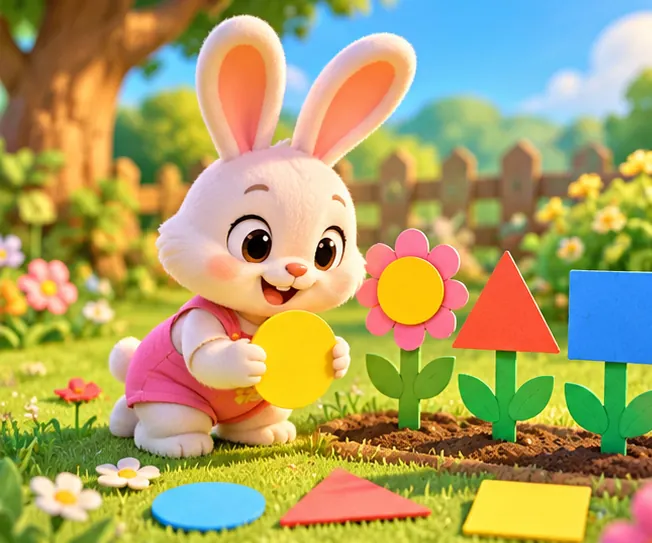
Explore other Shapes & Colors activities, including sorting objects and finding shapes in familiar places.
Screen-Free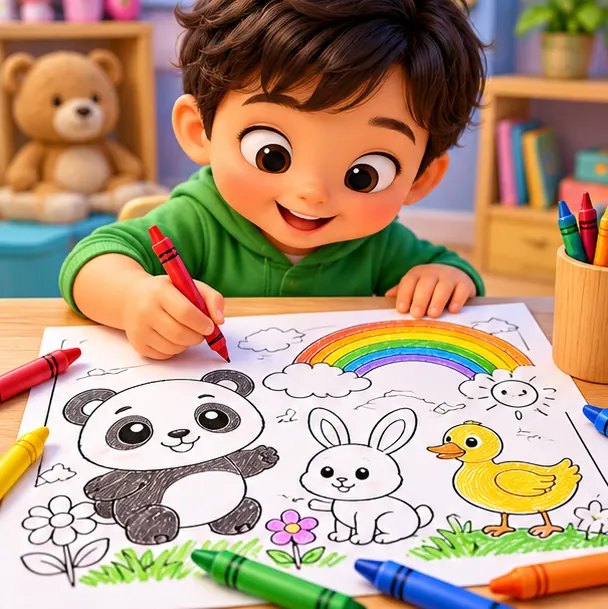
Use Color Match & Find to connect color swatches with matching objects. Continue with Rainbow Color Hunt to search for real objects around the room.
For Adults
Light can change how a color appears. Compare objects in the same light and talk about close shades without demanding exact naming.
After matching three colors, add another color or look for one matching object in a different room. The Rainbow Color Hunt turns the matching idea into an observation walk.
Explore Related Activities →Use real objects, picture cards or drawings. Ask the child to name the color they can actually see, because many objects come in more than one color.
Choose red, yellow, blue, green, orange and purple. Find or point to one example of each, then swap roles so the child chooses a color for the adult to find.
There is no need to correct every answer immediately. Invite the child to describe what they see and compare two objects side by side.
Find an object or picture that matches the target color. Choose the closest match and then look for another example with a similar color.
Print Rainbow Color Hunt in A4 or US Letter. Search a safe area for each color, then draw or name one object that matches.
Draw a line from each color swatch to the object with the same main color, then find one matching object in your surroundings.
Color Match & Find is a direct paper version of the object-to-color activity. Rainbow Color Hunt is an additional screen-free extension for finding colors around the home.