Start with a smaller step
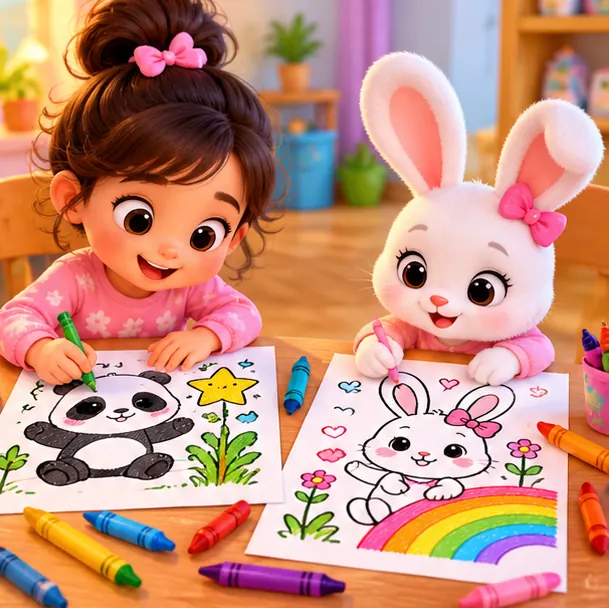
Offer a simple shape or character outline to decorate, or ask the child to choose between two colors or objects.
Imagine It. Draw It. Tell the Story!
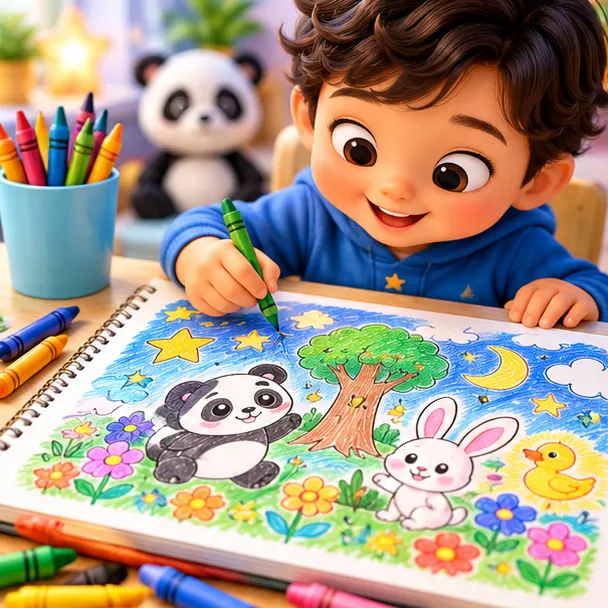
Use open-ended prompts to encourage drawing, visual planning, imagination and conversation.
Draw Panda on an adventure, Bloom Bunny’s garden, a magical door, Lumi-Web’s web or an entirely new Kids4U character.
Invite the child to draw a Kids4U character, a favorite place or a completely new creation. Ask what is happening in the picture and which detail they would like to add next.
Offer two or three prompt choices rather than a blank page with no starting idea. The child can draw, make marks, point to elements, or ask an adult to write their words.
Goal: Use drawing to express an idea, add meaningful details, and explain a simple story or observation.
Offer two or three prompts and let the child choose one. A picture can begin with simple shapes or marks; invite the child to explain the idea rather than copying a model.
Pick a starting idea such as “a tiny star needs help,” “design a magic garden,” or “draw an animal in a new place.” Let the child choose the subject or combine two prompts.
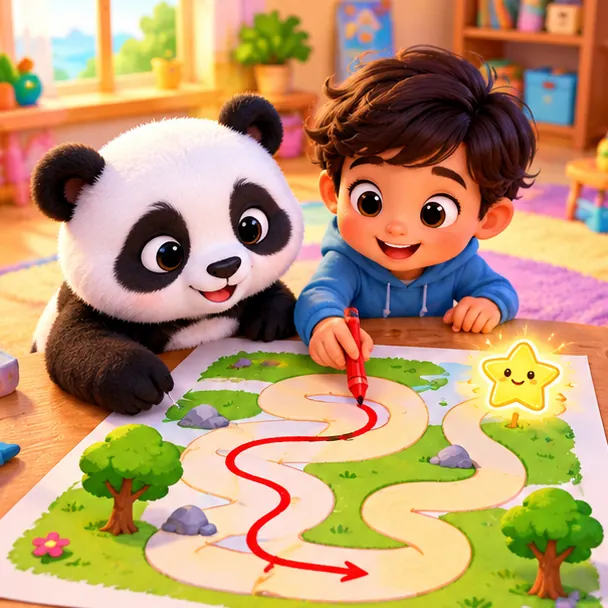
Invite the child to draw the main subject, one place detail and one thing that happens. There is no required drawing style; simple shapes, symbols and marks can tell the idea.

Ask the child to describe the picture. Write a few words they dictate if they want a caption. Ask whether the character has a problem, a helper, or something new to discover.
Draw a star, a tree and a house. Connect them with a path, then invite the child to tell why the star is travelling and who might help it.
“What is happening in your picture?”
“Which detail should we add next?”
Draw a start point, a destination and one obstacle. Add an arrow or path, then explain how the character reaches the destination.
Ask: What could the character try if the first path is blocked?
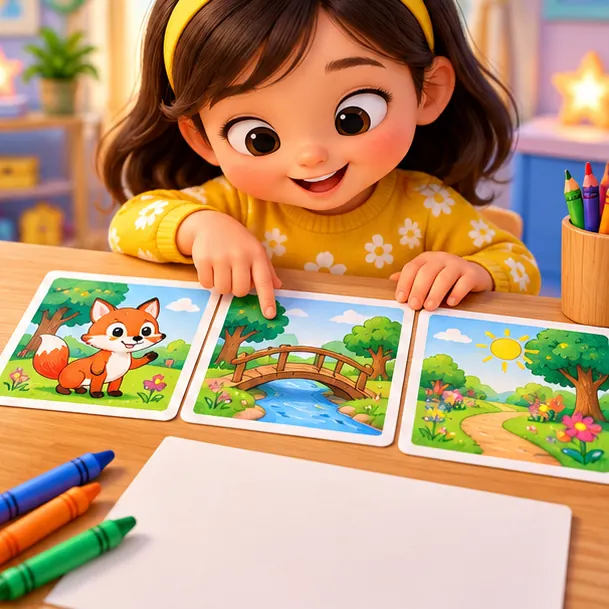
Turn the drawing over and invite the child to draw the next scene. Compare the two pictures and let the child decide what changed between them.
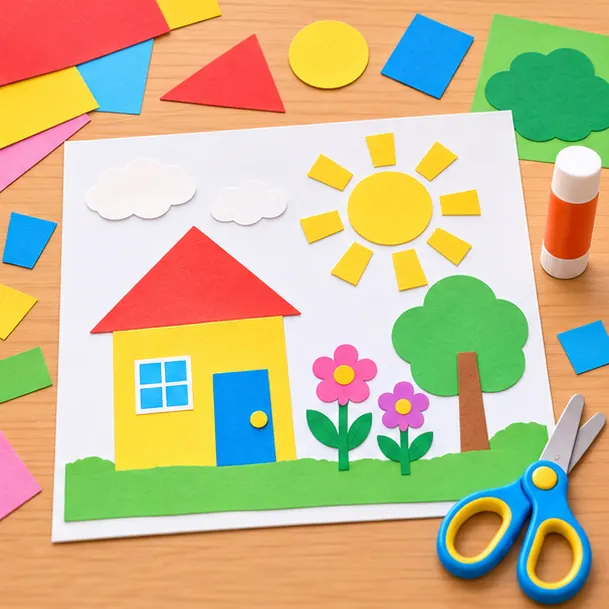
“What is happening in your picture?”
“Which detail should we add next?”
Offer a simple shape or character outline to decorate, or ask the child to choose between two colors or objects.
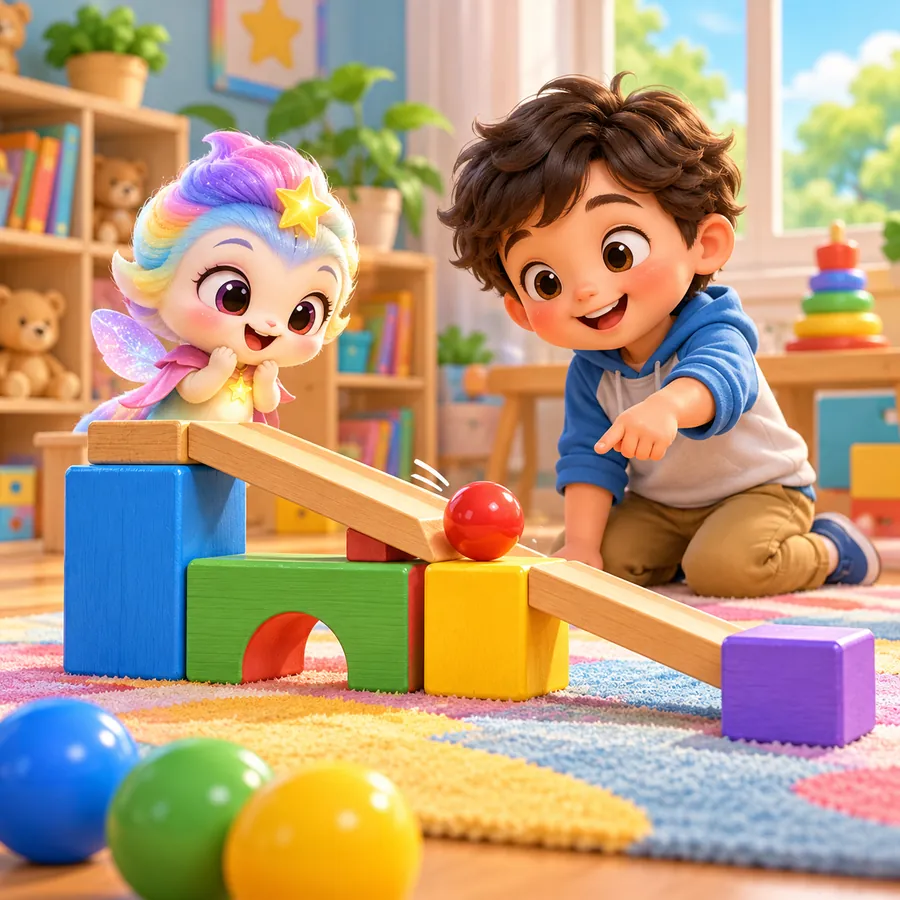
Create a three-picture sequence: beginning, problem and ending. Ask the child to include a clue that helps the viewer understand the story.
Avoid judging drawings by realism or staying inside lines. The purpose is communication and idea-making; adapt the tool to the child’s grip, comfort and mobility.
Explore Creative activities that extend a picture into a story, craft or coloring project.
Screen-Free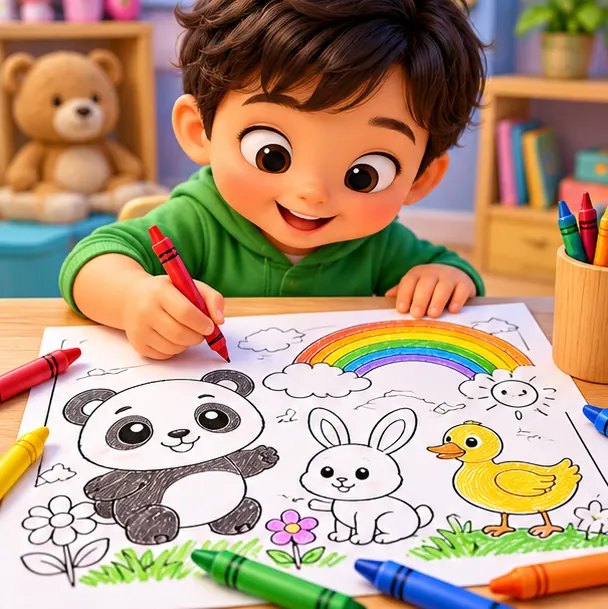
Use My Drawing Prompt Studio for open-ended drawing ideas. Color, Then Tell the Story remains available when the child wants a guided coloring scene.
For AdultsAsk open questions about the picture. Avoid correcting the drawing; let the child decide what each mark or detail represents.
After the child finishes a picture, invite them to draw what happens next on another page. Keep the first drawing unchanged so the new picture becomes a continuation.
Explore Related Activities →Use the drawing canvas to choose colors, make a scene and add details. The child can save the picture and tell an adult what is happening in it.
Print Color, Then Tell the Story in A4 or US Letter for a guided drawing follow-up. The child can add a new detail and explain what happens next.
Choose one of six original drawing prompts, make your own picture and describe a favorite detail.
My Drawing Prompt Studio offers six open-ended ideas for original pictures. Children choose their own details and can explain the drawing aloud or dictate a short description to an adult.