Start with a smaller step
An adult pre-cuts a few wide strips and the child practices opening and closing the scissors on a single line, with close supervision.
Help Bloom Bunny Follow the Garden Paths
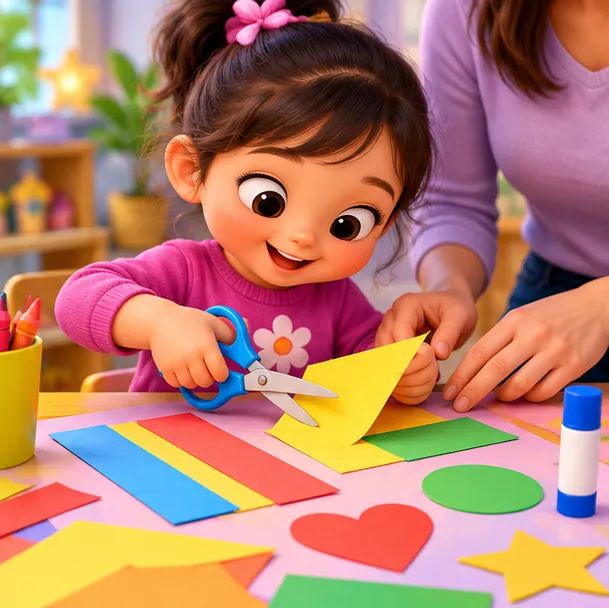
Practice safe scissor handling and gradually increase cutting control from straight lines to simple shapes.
Bloom Bunny needs help following garden paths. Cut along straight, wavy and zigzag paths before trying shapes.
Bloom Bunny needs a paper garden path. An adult can draw a short thick line, model safe scissor handling and stay beside the child while they practise small controlled snips.
Sit together at a steady table and clear the area. An adult should model safe carrying and hand placement before the child begins cutting.
Goal: Build cutting control gradually, following a simple line with the scissors while the other hand holds the paper safely.
An adult should prepare the paper, choose child-safe scissors and demonstrate safe handling first. Start with a few short snips; move to a straight line only when the child can control the tool comfortably.
Give a small strip of paper and invite the child to make a few short snips along the edge. An adult can hold the paper if needed; do not begin with a complex outline.
Move to a straight, bold line. Encourage small snips while turning the paper with the helper hand. Stop if the scissors become difficult to control.
When a straight line is manageable, try a gentle wave or a large corner. Focus on guiding the paper and moving slowly, not on cutting exactly along every mark.
Draw a thick straight path for Bloom Bunny. The child makes snips along it, then tries a large wavy line. Use the cut paper as a path for a toy rather than judging the edge.
“Where will your scissors go next?”
“Would it help to turn the paper a little?”
An adult draws a thick straight or gently curved line. With child-safe scissors and close supervision, practice several small cuts; use the strips to make a garden path.
Ask: Where could your paper path lead?
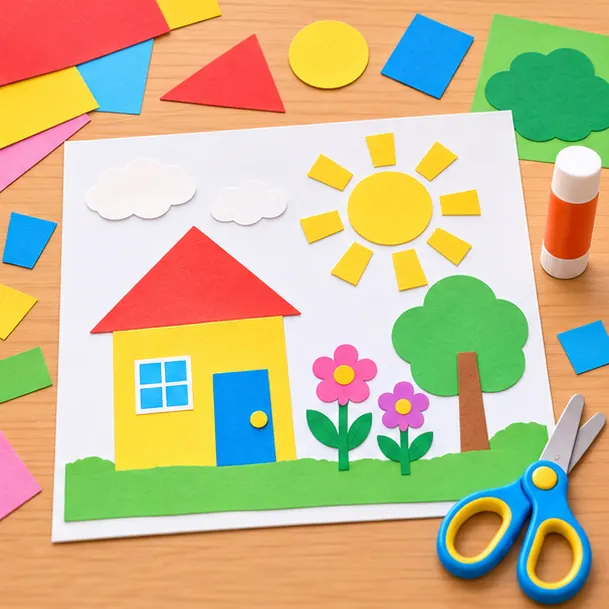
Glue the large paper strips into a picture or sort them by length. The child can also draw a route with a crayon if scissors are not appropriate that day.
“Where will your scissors go next?”
“Would it help to turn the paper a little?”
An adult pre-cuts a few wide strips and the child practices opening and closing the scissors on a single line, with close supervision.
Try cutting around a large simple shape with rounded corners. Add only one new difficulty at a time—curves, then corners, then a complete outline.
Adult supervision is essential. Use child-safe scissors, keep blades away from faces and fingers, and stop when the child is tired. An adult should handle preparation and any cutting tool unsuitable for the child.
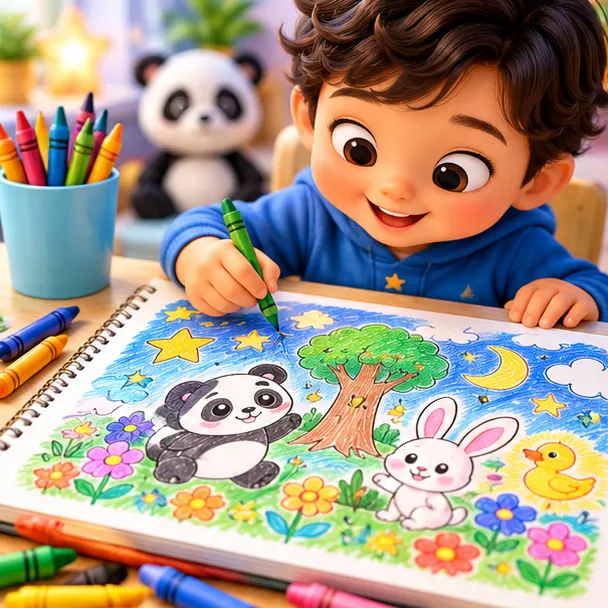
Explore Creative activities that practise drawing, arranging and making with paper.
Screen-Free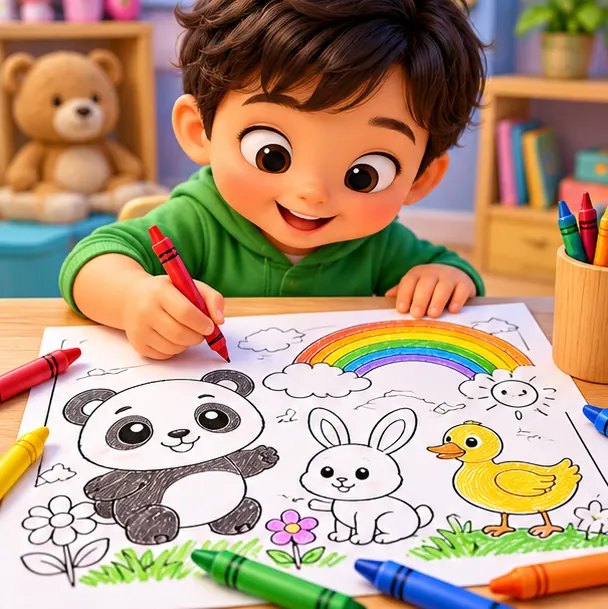
Use Scissor Skills Trails to trace paths first; any cutting should be supervised and appropriate for the child.
For AdultsStay within arm’s reach, keep scissors pointed away from the body and stop when the child is tired or uncomfortable.
When short snips are comfortable, try a thick straight line and then a gentle curve. Stop before the child becomes tired; precision is less important than safe, controlled movement.
Explore Related Activities →Practise tracing a garden path on screen to preview the direction of the line. The printable can be used for supervised paper practice only when the child is ready and an adult is present.
Print Scissor Skills Trails in A4 or US Letter. An adult should prepare the activity and supervise closely; tracing can be practised before any cutting begins.
Trace each path first, then practice supervised cutting only when the child is ready.
Scissor Skills Trails starts with tracing paths and can support later cutting practice. Use child-safe scissors only when appropriate, with an adult close by throughout.