Start with a smaller step
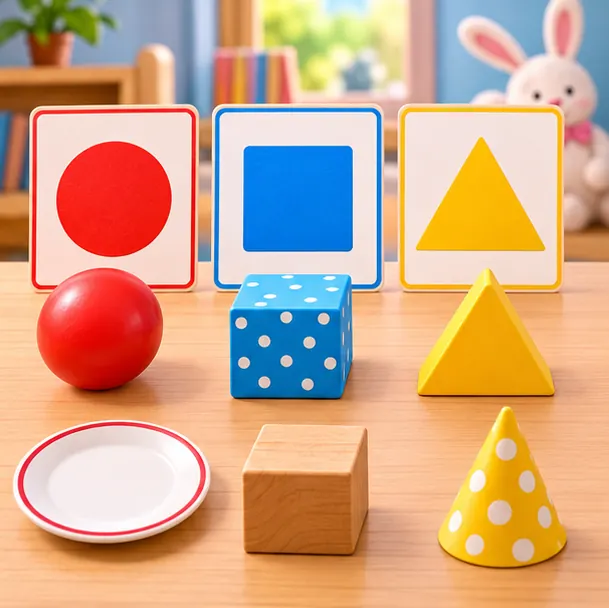
Use two pairs and keep cards face up for the first round. Turn them face down only when the child understands the matching rule.
Help Lumi-Web Remember the Magic Web
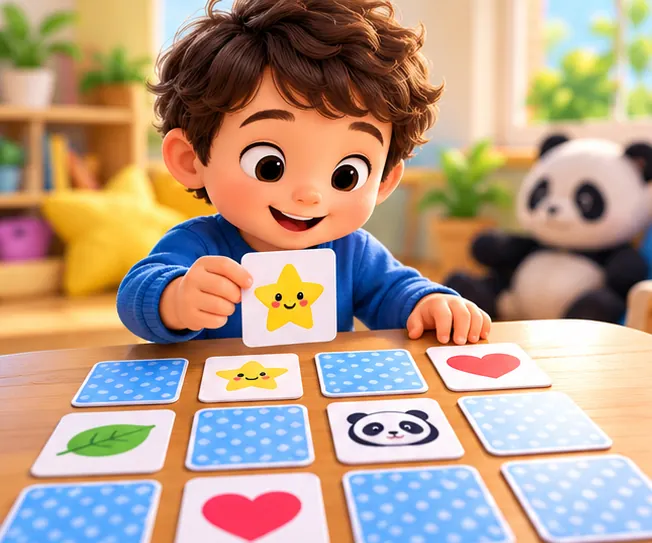
Practice remembering locations, matching pairs and noticing small changes.
Lumi-Web places picture pairs around a magical web. Can the child remember where each pair is?
Starlight Panda has hidden matching picture cards. Invite the child to turn over two cards, name what they see and remember each location before the cards are turned face down again.
Place cards face up first and let the child look at all the pictures. Then turn them face down in a neat grid; start with only three pairs.
Goal: Remember where pictures are located, take turns, and compare two cards to find a matching pair.
Begin with a small set of matching pairs and place them face down in a clear grid. Take turns revealing two cards, then return them to the same places if they do not match.
Show each pair and name the pictures. This first look helps children understand what counts as a match before the memory part begins.
Take turns choosing two cards. Name what appears on each one. If they match, keep the pair; if not, turn them back to the same positions so everyone can remember where they are.
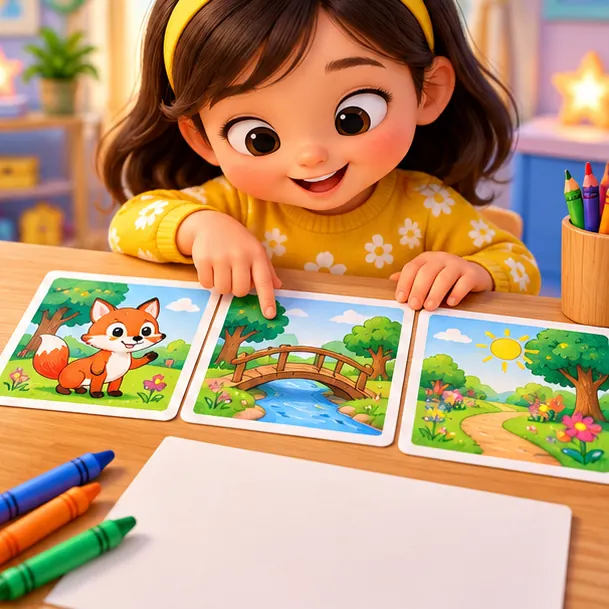
Before the next turn, say where a useful picture was seen, such as “the star was near the top.” At the end, count the pairs together, but focus on remembering and taking turns rather than winning.
Use pairs of stars, leaves and pandas. Turn all six cards face down. A child turns over two; if they are different, everyone looks briefly before they are returned face down in the same places.
“Where did we see the star card?”
“What helps you remember this place?”
Choose three pairs of picture cards, mix them, and place them face down. Take turns revealing two cards; keep a matching pair and turn unmatched cards back.
Ask: What detail helped you remember where the pair was?
Let the child design a pair by drawing the same simple symbol twice. For an easier non-memory version, keep cards face up and match pictures side by side.
“Where did we see the star card?”
“What helps you remember this place?”
Use two pairs and keep cards face up for the first round. Turn them face down only when the child understands the matching rule.
Add one pair at a time or use pictures that look more similar. Invite the child to explain a strategy, such as remembering a row or nearby picture.
Memory varies from day to day. Offer turns, pauses and a smaller set instead of making speed the goal. Use large cards that are safe for the child’s age.
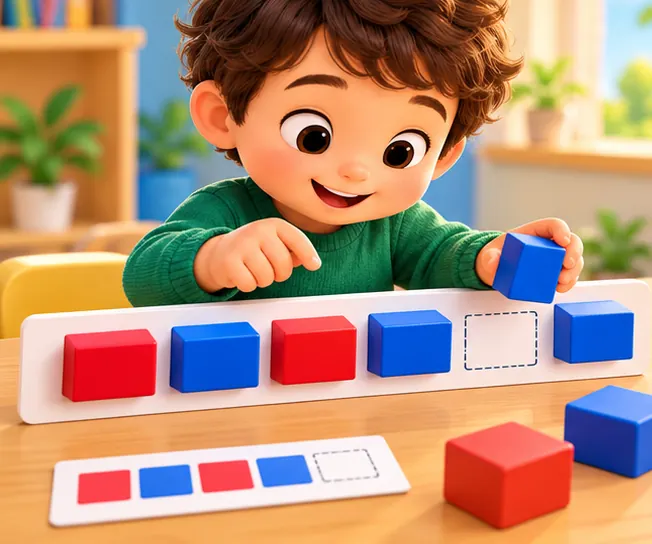
Explore Thinking & Logic activities that practise remembering details, noticing patterns and solving simple problems.
Screen-Free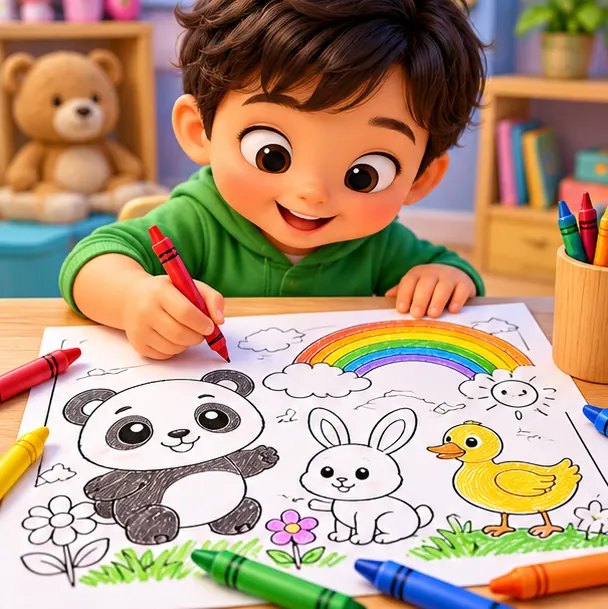
Use the matching printable to compare picture pairs away from the screen; keep the number of cards manageable at first.
For Adults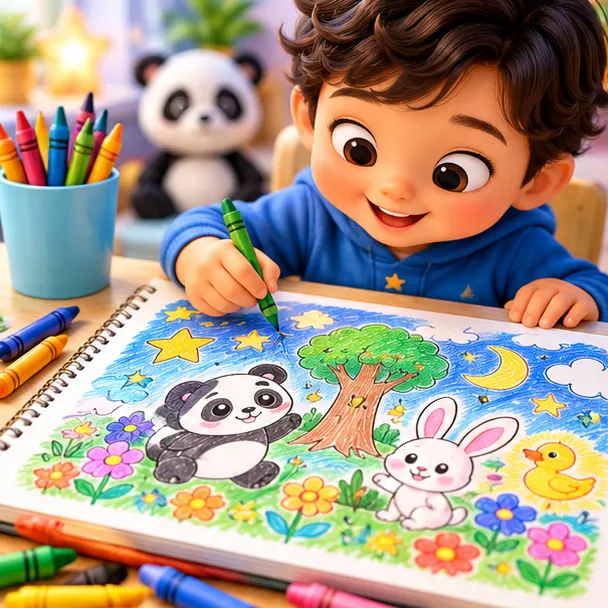
Let the child describe a card or its location aloud. The aim is careful remembering, not speed or competition.
When a small set of pairs feels familiar, add one more pair or ask the child to describe a card before turning it over. Keep the game relaxed and take turns.
Explore Related Activities →Turn over two cards and look for a matching picture pair. If they are different, notice where each card was before trying another turn.
For paper practice, print the memory cards in A4 or US Letter, cut them out with adult help and place them face down. Keep the matching pairs together when storing the set.
Print the cards, cut them with an adult and play a picture-matching memory game.
The memory activity uses picture pairs. Print the cards, have an adult prepare them if cutting is needed, then place them face down and take turns finding two matching pictures.