Start with a smaller step
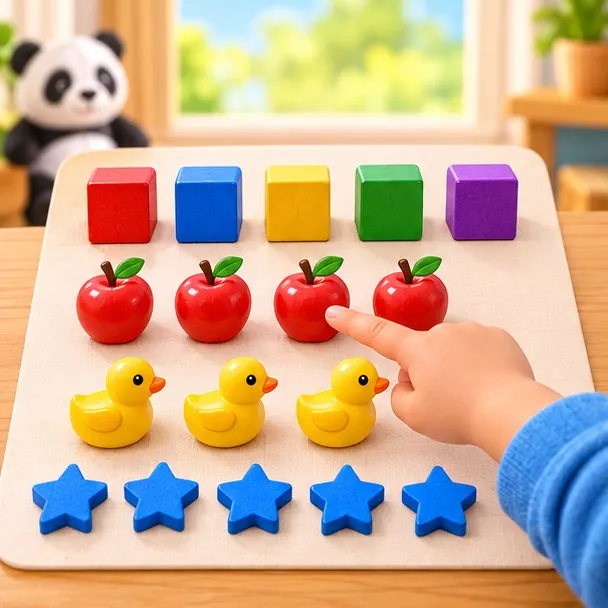
Work with two numerals that look different, such as 1 and 3, and use small quantities. The child can point instead of saying the number aloud.
Can You Spot the Number?
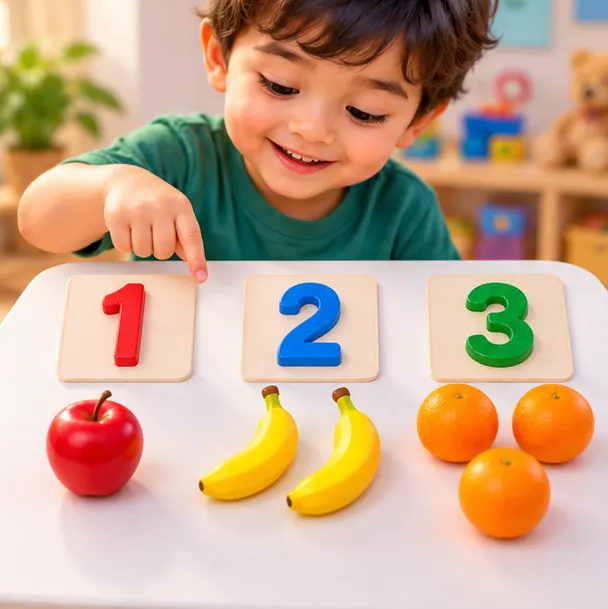
Recognize written numbers 1–10, say them aloud, connect symbols with quantities, and notice numbers in everyday life.
Show a numeral and a matching group of stars. Ask the child to say the number and point to the matching quantity.
Show Starlight Panda a number card and ask the child to find the same numeral. Then build a matching group of stars so the symbol is connected with an amount.
Put out only three cards at first, such as 1, 2 and 3. Keep the numerals upright and easy to see; avoid crowding the table with all ten at once.
Goal: Notice a written number, name or point to it, and connect it with a matching amount.
Begin with two or three numerals that are easy to tell apart. Ask the child to find a named numeral, then connect it to a small group of objects; pointing is an acceptable response.
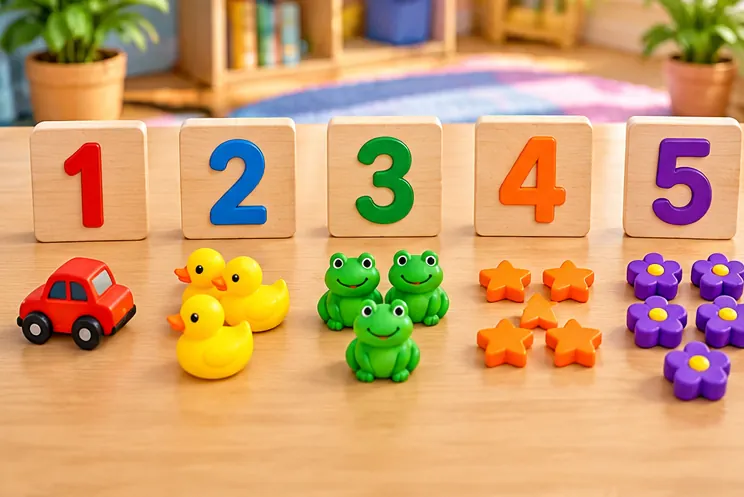
Place three cards on the table and name them once. Ask the child to find one numeral you say, for example “Can you point to 2?” Give time to look before adding clues.
Trace the shape of the chosen numeral with a finger, then place that many large objects beside it. For number 3, count three blocks one at a time. The tracing step is optional; pointing is a valid response.
Look for numerals on a book, calendar or house number with an adult. Ask the child to point to a familiar number, then make a small group that matches it.
Show the cards 2, 4 and 5. Say “Find 4.” Once the child points to the card, count four large blocks and place them below the numeral. If the numeral is unfamiliar, say its name and try again later.
“Which number did you choose?”
“Can you show four objects to go with it?”
Show cards 2, 4 and 5. Ask the child to find 4, then make a group of four large safe objects. Swap the cards and try again.
Ask: What helped you spot the number?
Make a “number of the day” card. Invite the child to find it on a page or object label, trace it with a finger, and build a matching group from safe household items.
“Which number did you choose?”
“Can you show four objects to go with it?”
Work with two numerals that look different, such as 1 and 3, and use small quantities. The child can point instead of saying the number aloud.
Lay out numbers 1–5 in order, cover one, and ask which number is missing. Then shuffle the cards and ask the child to put them back in sequence.
Some numerals are visually similar, and recognition can develop unevenly. Keep practice brief, model the name without pressure, and connect the symbol to objects rather than relying on flashcards alone.
Explore Early Math activities that connect numeral recognition with counting, matching and comparing groups.
Screen-Free
Number Road 1–10 is a two-page worksheet for tracing, writing and showing quantities from 1 to 10, matching the full range practised on this page.
For Adults
Keep practice short and show the numeral beside a matching quantity so the symbol has a clear meaning.
Tracing is an optional way to look closely at numerals. Keep marks large and the practice relaxed; children can trace with a finger, point to the shape, or use a crayon or pencil with adult supervision.
Example: beside the numeral 4, draw four dots, then touch each dot once as you count “one, two, three, four.”
Start with just 1–3, use finger tracing instead of a pencil, or let the child choose the numeral. Later, mix the cards and ask the child to find a named number and show that many objects.
See more number practice in Counting 1–10 Through Play and Number Matching Activity.
After recognizing a few numerals, place them in order or hide one card and ask which number is missing. Return to the matching activity to connect the symbols with quantities.
Explore Related Activities →Find the requested numeral among the choices. Take time to look at its shape; after selecting it, try finding the same numeral on a card or calendar with an adult.
Print Number Road 1–10 in A4 or US Letter to trace each numeral, write it and represent the matching quantity. The two-page worksheet covers the full range taught on this page.
Trace, write and connect written numbers with amounts.
Number Road 1–10 is a two-page worksheet. Part A practises numerals 1–5 and Part B practises 6–10. Each row asks the child to trace the numeral, write it and draw the matching quantity.