Start with a smaller step
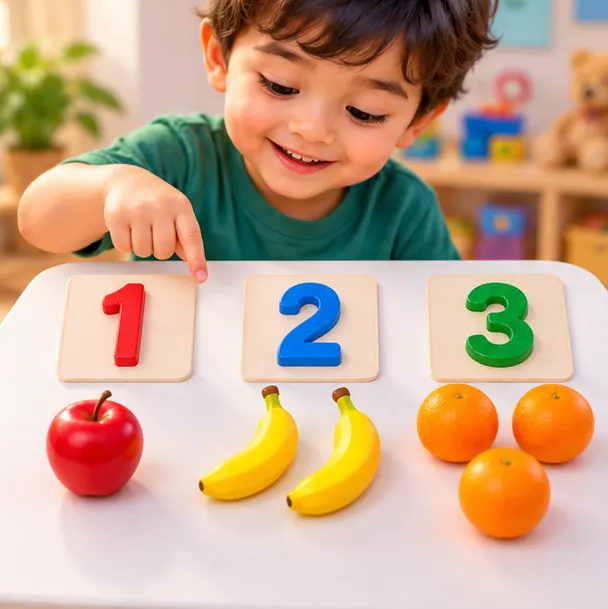
Use one object plus one object, or groups of two and one. Keep the original groups in separate spaces until it is time to join them.
Panda’s Star Addition Adventure
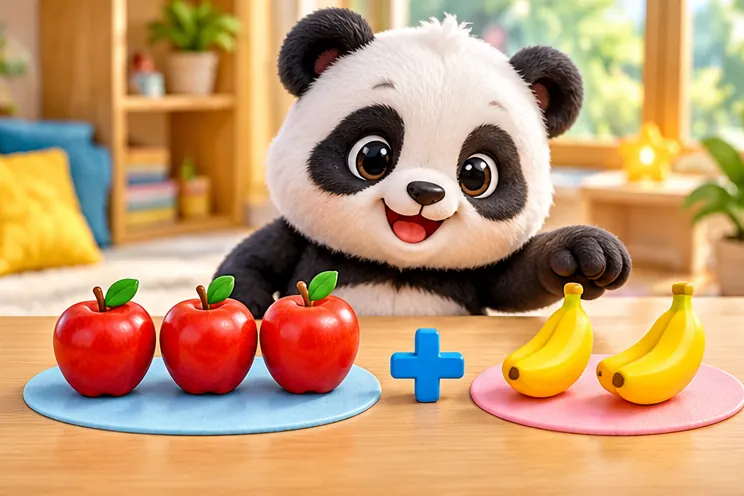
Explore early addition by combining small groups of pictures or objects before introducing simple number sentences.
Panda has two stars and then receives three more. Put the groups together and count all five stars.
Starlight Panda has two groups of fruit to put in one basket. Ask the child to count each group, bring them together and count all the pieces to find the total.
Keep the two groups separate at first so the child can see where each quantity begins. Start with totals up to five before trying larger combinations.
Goal: Understand addition as joining two groups and counting how many there are altogether.
Use two small, separate groups of objects. Count each group first, move them together, then touch each object once while counting the combined total.
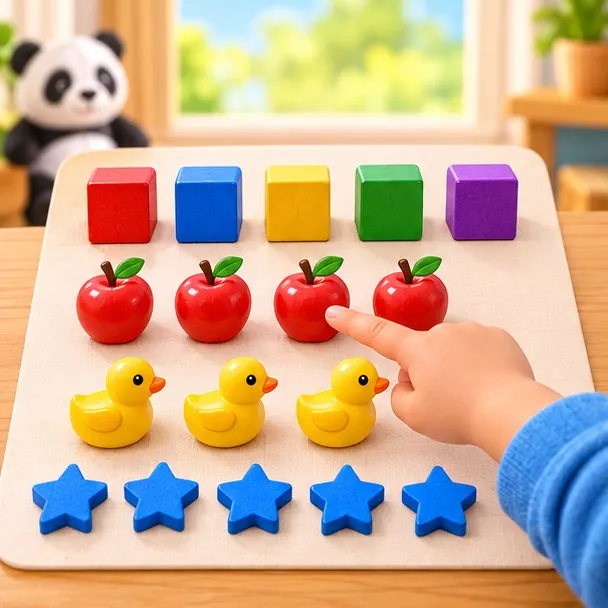
Put two objects in one space and three in another. Count each group separately before joining them. Say, “Here are two; here are three more.”
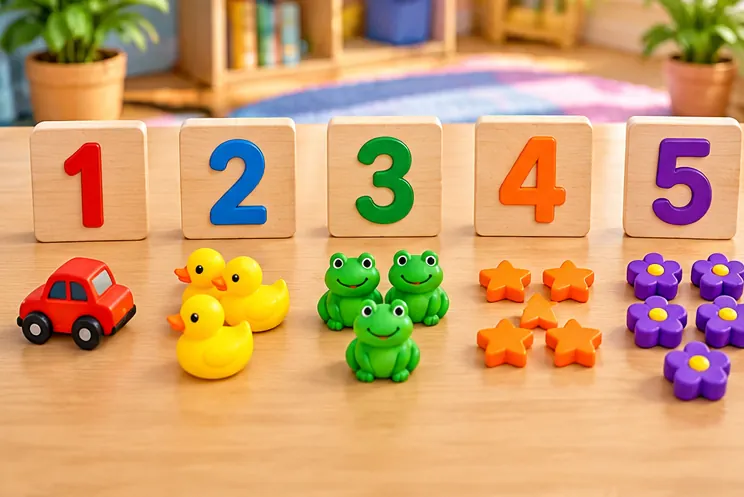
Move the groups together into one line or one circle. Touch every object once and count the whole group. Emphasize “altogether” as the question being answered.
Draw two dots and then three more dots. Count all five. Only after the child understands the objects, optionally write 2 + 3 = 5 and explain that the symbols record the action.
Draw two stars for Panda and three stars that friends bring. Count the first two, then the three new ones, then touch all five in order. Ask the child to tell the story of what changed.
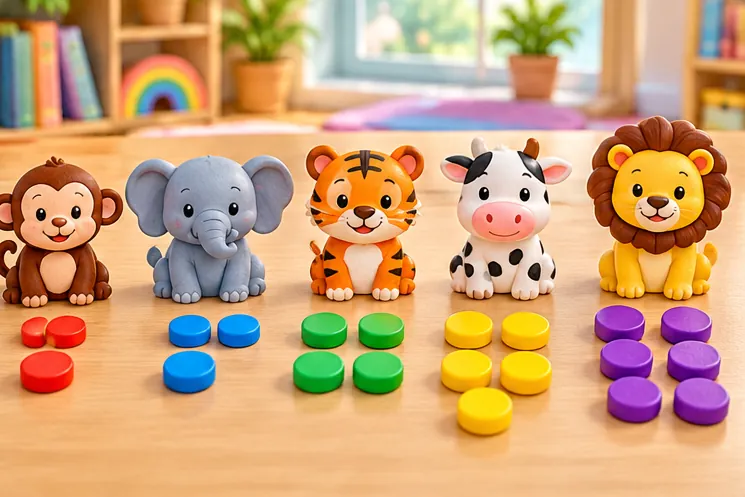
“How many did we start with?”
“What changed when we added the other group?”
Make a group of two apples from large toy or paper fruit. Add one more apple and count the whole group again. Write or say 2 + 1 = 3 if the child is ready.
Ask: How many do we have altogether?
Use an everyday story: “There are two books on the shelf and one more goes beside them. How many now?” Let the child move or draw the objects before answering, and keep totals small.
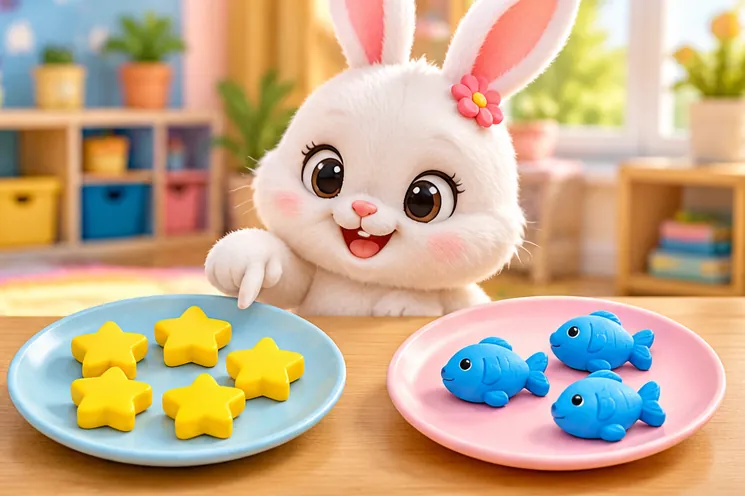
“How many did we start with?”
“What changed when we added the other group?”
Use one object plus one object, or groups of two and one. Keep the original groups in separate spaces until it is time to join them.
Let the child invent an addition story and draw both groups. Ask an adult or sibling to solve it by moving the pictures together.
At this stage, objects and pictures are more useful than memorizing number sentences. Accept counting all the objects as a valid strategy and do not rush to mental arithmetic.
Explore more Early Math activities that practise counting, number matching and comparing groups.
Screen-Free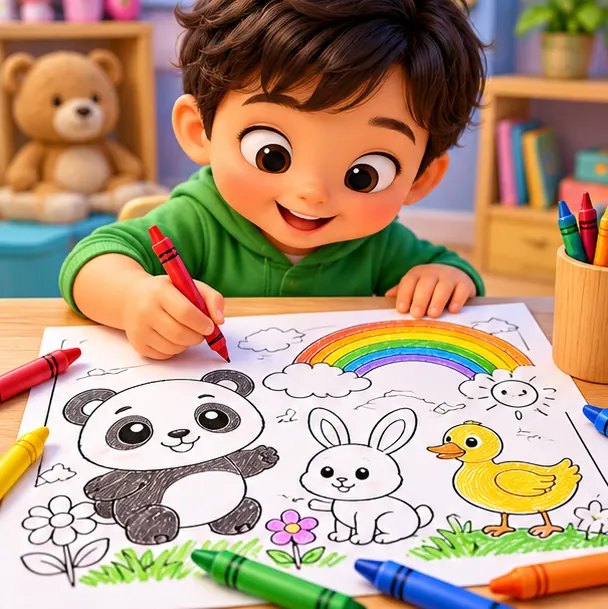
Use the picture-addition worksheet to combine two groups and record the total shown.
For Adults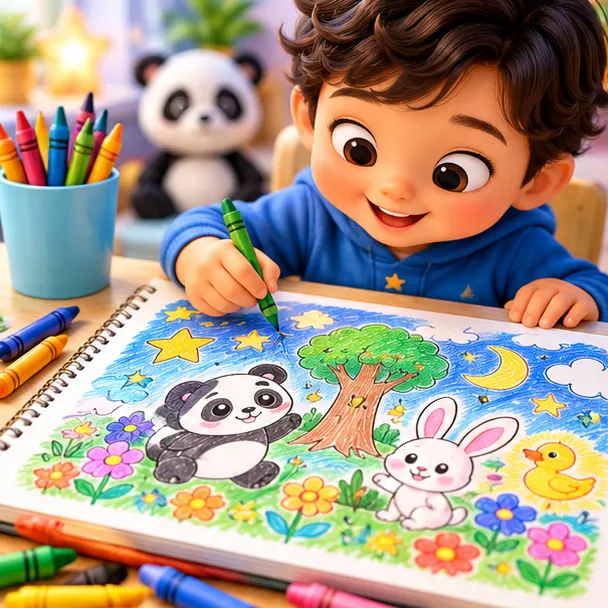
Keep the groups visible while counting. Ask the child to show how the total includes both starting groups.
When the child can combine two small groups, try a different pair of numbers or draw the objects instead of using counters. Keep the total small enough to count comfortably.
Explore Related Activities →Choose the picture groups and count how many objects there are altogether. Move through each group one by one so no object is counted twice.
Print the picture-addition sheet in A4 or US Letter. Work through one picture at a time, count both groups and record or point to the total.
Join the illustrated groups and write the total.
The worksheet shows picture groups for children to combine and count. Encourage them to count the first group, count the second group, then count all objects together.