Start with a smaller step
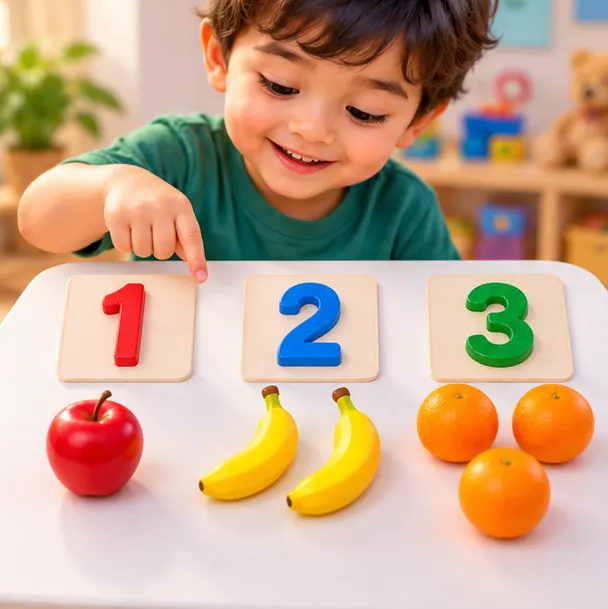
Use groups of one, two and three. Arrange the objects in paired rows and ask “Which row has one left over?” before introducing the words more and fewer.
Panda’s Picnic Comparison
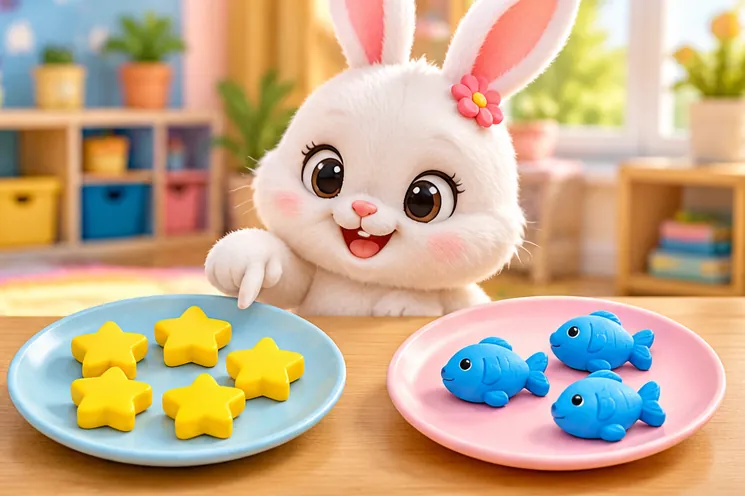
Compare groups using more, fewer and the same, then connect comparisons to small written numbers.
Panda has two picnic apples while a friend has four. Ask which group has more and how the child knows.
Put two picnic plates in front of Panda and a friend. Invite the child to pair one object from each plate, then notice whether either plate has objects left over.
Arrange each group in a row or pair the objects one-to-one. Use objects that are similar in size so the comparison focuses on quantity, not on which object looks bigger.
Goal: Compare groups using more, fewer and the same, and explain how the child checked.
Set out two small groups with similar objects and clear spacing. Let the child look first, then pair one object from each group to check which group has more, fewer or the same amount.
Place two objects on one mat and four on another. Ask the child to look before counting; then count both groups to check.
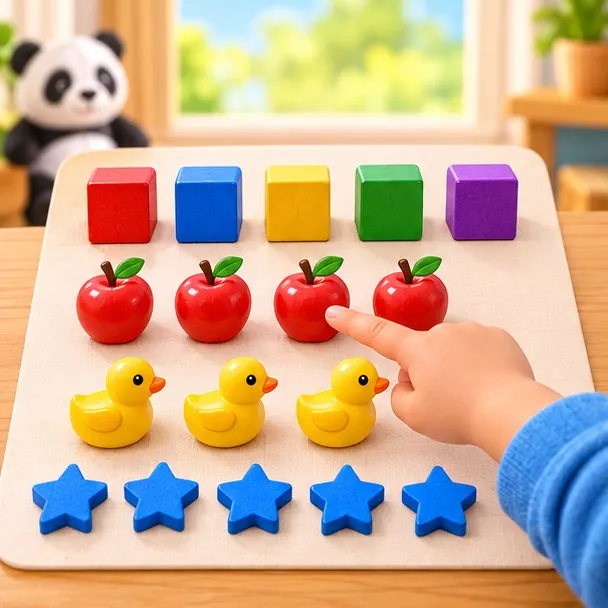
Move one object from each group into pairs. The group with unpaired objects has more; the other has fewer. If every object has a partner, the groups have the same amount.
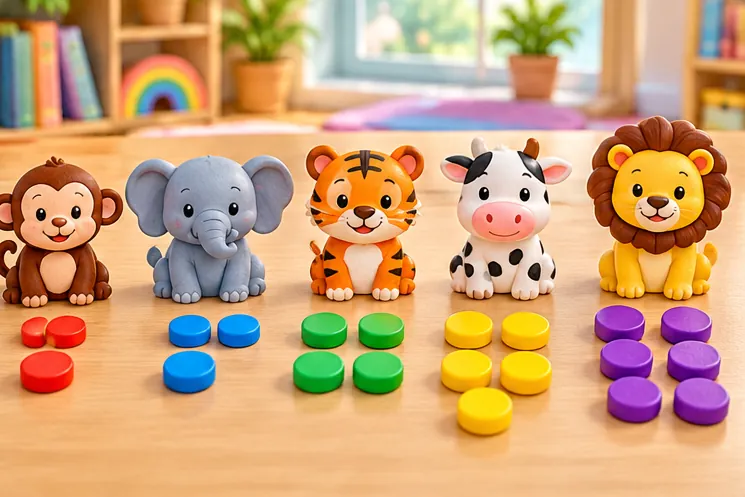
Ask the child to point to the extra objects or show the matching pairs. Use “more” for quantity and “bigger” for size so those ideas do not get mixed together.
Put three pretend apples on Panda’s plate and five on a friend’s plate. Pair three apples from each plate. Two apples remain on the friend’s plate, so that plate has more.
“Can you show which objects do not have a partner?”
“How could we make the groups the same?”
Place three large counters on one plate and five on another. Count both groups, then move one counter and compare again.
Ask: Which plate has more now, and how can you tell?
Compare two groups of books to put away, socks to pair, or crayons to share. If groups are equal, change one object and ask what would make them equal again.
“Can you show which objects do not have a partner?”
“How could we make the groups the same?”
Use groups of one, two and three. Arrange the objects in paired rows and ask “Which row has one left over?” before introducing the words more and fewer.
Give the child a target such as four. Ask them to build one group with more than four and another with fewer than four, then explain both choices.
Children may judge by length or spacing rather than by number. Pairing objects makes the comparison visible. Avoid treating “more” as a speed question; let the child rearrange and recount if uncertain.
Explore Early Math activities that develop counting, matching and comparison of quantities.
Screen-Free
Use More, Fewer or the Same? to compare picture groups and show which amount is larger or equal.
For Adults
Pair objects before counting when possible. This helps the child see what is left over rather than judging by the size of the arrangement.
After comparing two groups, move one object and ask what changed. Invite the child to make the groups equal again and explain how they checked.
Explore Related Activities →Compare the two picture groups and choose whether one has more, fewer or the same number. Pair the objects mentally or count them to check.
Print More, Fewer or the Same? in A4 or US Letter. The child can compare each pictured pair, circle the correct relationship or explain the choice aloud.
Compare three pairs of groups and follow the clue for more, fewer or the same amount.
This worksheet presents picture groups to compare. Encourage the child to pair objects one-to-one, then identify whether any objects are left without a partner.